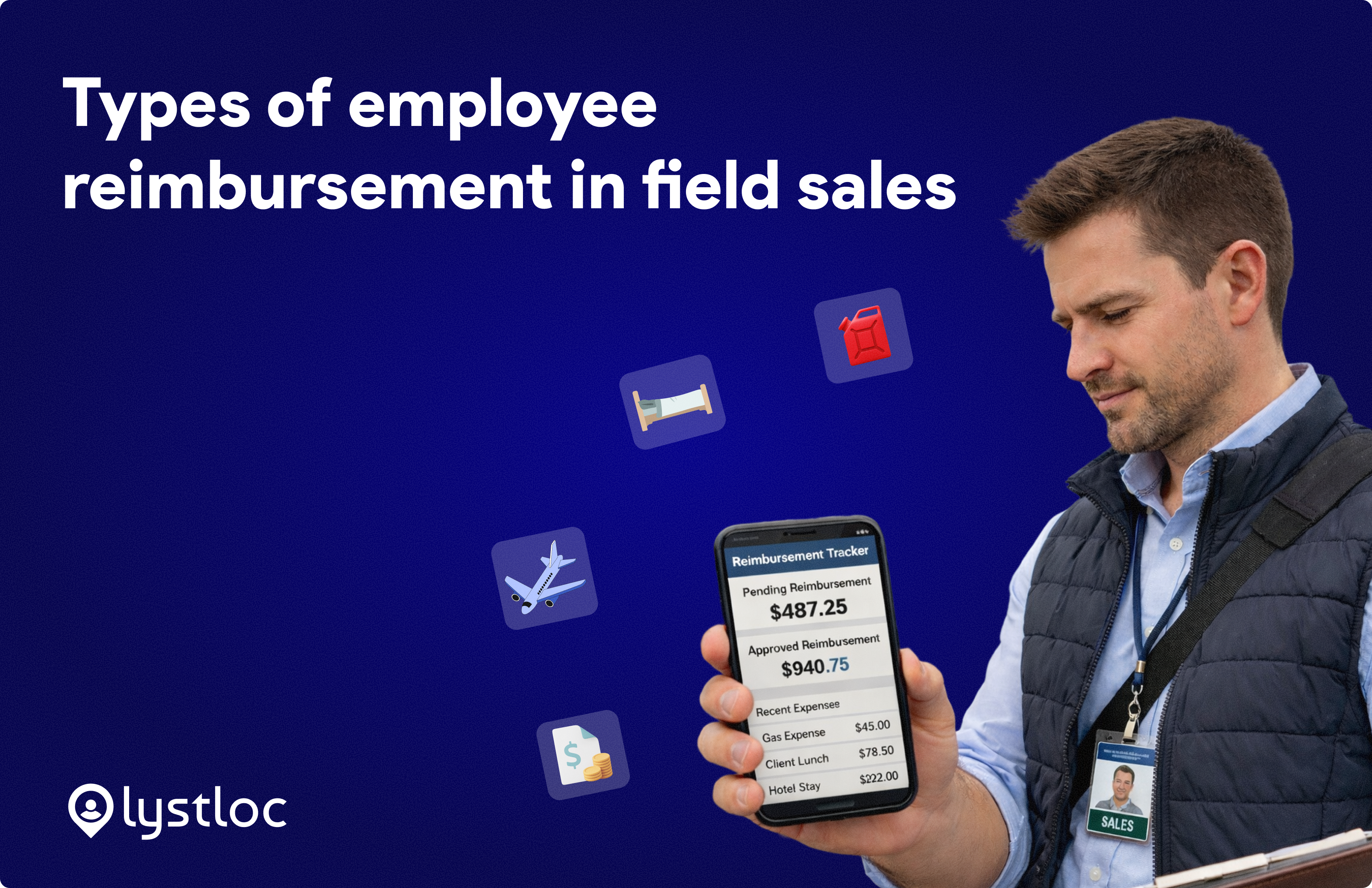
Are you the one who is getting tired of calculating your employee reimbursement? Yeah, we understand your complexity; sometimes, your employees’ reimbursement calculation will be a mismatch with your calculation. Other times, your employees can ask for extra mileage costs without traveling.
Still more things, right?
Continue reading this blog to help find the right answer.
First, let’s discuss the types of employee reimbursement in field sales.
What is Employee Reimbursement?
Table of Contents
Field sales management is essential to generating income and maintaining solid support with clients. Field sales reps are always on the go, attending events, visiting clients, traveling across regions, and giving product demos. Numerous business-related expenditures accompany all of this activity. Field employees need to claim their travel and other benefits expenditures from the company.
Employee reimbursement becomes important in this situation. In addition to guaranteeing compliance and transparency, a well-defined and effective compensation system increases worker satisfaction and output.
Why is Field Sales Employee Reimbursement Important?
Field salespeople frequently have to pay for things out of pocket. An inefficient employee reimbursement procedure may result in:
- Payment delays
- Salespeople’s frustration
- Risks of compliance
- Decreased enthusiasm
A well-structured reimbursement plan increases financial accuracy, builds confidence, and frees up sales employees to concentrate on closing more deals.
Types of Employee Reimbursement in Field Sales
In field sales, there are different types of employee reimbursement according to the industry type.
- Transportation and Travel Compensation
- Daily Allowance and Accommodation
- Meeting costs and client entertainment
- Operations and Communication Costs
- Training Costs and Auto Repair Charges
Let’s look at one after the other in detail.
Transportation and Travel Compensation
In field sales, one of the most frequent costs is travel. Fuel expenses, mileage deductions, flights, train tickets, taxi fares, tolls, and parking fees are frequently covered under this area of employee reimbursement.
For the purpose of streamlining claims and maintaining uniformity across areas, several organizations establish standard charges per mile or per kilometer. GPS and expenditure monitoring capabilities are frequently integrated into effective field sales management systems in order to verify and streamline trip claims.
Daily Allowance and Accommodation
Companies either give fixed housing allowances or compensate for hotel stays for overnight business visits. Additionally, food expenditures are either covered by a per diem policy or paid against invoices.
The employee reimbursement system is made more effective and cost-efficient by having clear rules regarding grade-based entitlements or city-based restrictions.
Meeting costs and client entertainment
Building relationships is essential in field sales, and this may be accomplished by organizing events, small promotional gifts, or business lunches. An organized policy for employee reimbursement establishes acceptable thresholds and approval levels for these costs.
Effective field sales management maintains responsibility and compliance while ensuring that these expenses are in line with corporate objectives.
Operations and Communication Costs
Mobile phones, internet connections, and digital sales tools are all very important to field sales reps. Reimbursement might include data plans, monthly mobile fees, or, if paid for individually, CRM-related costs.
In order to guarantee efficient field operations, employee reimbursement plans frequently pay operational costs like printing marketing materials or providing courier services.
Training Costs and Auto Repair Charges
Businesses may reimburse expenses for seminars, sales training courses, and certifications to enhance performance. Employees who use their own cars for work-related purposes may be reimbursed for maintenance, insurance, and car repairs.
These categories show organizational support for both professional growth and operational effectiveness when they are included in Field Sales Management policies.
Benefits of Employee Reimbursement in Field Sales:
Several benefits are included with the employee reimbursement for field salespeople.
- Boosts Employee Morale and Satisfaction
- Boosts Efficiency
- Fosters Transparency and Trust
- Assists in Securing and Maintaining Talent
- Assures Financial Control and Compliance
- Fosters Career Advancement
Boosts Employee Morale and Satisfaction
When reimbursements are handled appropriately and promptly, field employees may feel encouraged, which boosts engagement and morale.
Teams can focus on accomplishing corporate objectives when there is clarity and less time spent on claim disputes. Because of simple policies, it improves employee efficiency.
Boosts Efficiency
Teams can focus on accomplishing corporate objectives when there is clarity and less time spent on claim disputes. Because of simple policies, it improves employee efficiency.
Fosters Transparency and Trust
Expense limitations, paperwork, and approval processes with clear instructions minimize miscommunications and promote a trusting environment between management and field employees.
Assists in Securing and Maintaining Talent
Strong benefits and reimbursement plans demonstrate that the business prioritizes the welfare of its workers, which in turn increases retention rates.
Assures Financial Control and Compliance
Organizations can keep accurate financial records and adhere to labor and tax laws with the support of a well-run reimbursement system. In addition to preventing financial abuse, structured procedures improve insight into business expenditure trends.
Fosters Career Advancement
Employees are motivated to improve their skills when training programs, certifications, and skill development activities are reimbursed. Individuals gain from this, and the organization’s overall performance and competitiveness are strengthened.
The Best Ways to Handle Field Sales Employee Reimbursement

To make employee reimbursement procedures more efficient, companies should:
- Clearly define your policies
Specify acceptable costs, approved things, and documentation needs to clearly inform employees.
- Employ Tools for Digital Expense Management
Automated methods expedite approvals, reduce error rates, and enhance transparency.
- Set up Approval Workflows in Place
Accountability is guaranteed via structured hierarchies without disrupting operations.
- Make Sure Payment Is Made on Time
Within field teams, prompt payments increase confidence and morale.
- Track and Examine Data on Expenses
Data-driven field sales management makes it easier to spot expenditure trends and areas for cost savings.
To Sum Up
A thorough system of employee reimbursement is essential to successful field sales management. Organizations may lower administrative hassles, limit expenses, and enhance employee satisfaction. Companies can clearly identify expenditure categories, establish explicit regulations, and utilize digital technologies for quicker processing.
Finally, field sales teams can concentrate on developing client connections and expanding their businesses. When they have a solid reimbursement structure in their workplace, they don’t need to worry about money.