AI is changing the way how products are sourced, qualified, and closed. It is no longer a future tool for sales teams. In 2026, sales organizations will integrate AI into everyday processes, from AI-drafted outreach to predictive lead scoring and real-time data. However, not all teams have adopted AI copilots to the fullest extent. Some others are still experimenting. What separates leadership from the losers, and how quickly is this change occurring? Let’s examine the statistics in detail.
Businesses need to manage their field sales activities with more than just spreadsheets and manual tracking as consumer expectations continue to climb. AI enables sales teams with real-time information, intelligent recommendations, and automation that delivers increased productivity and better results.
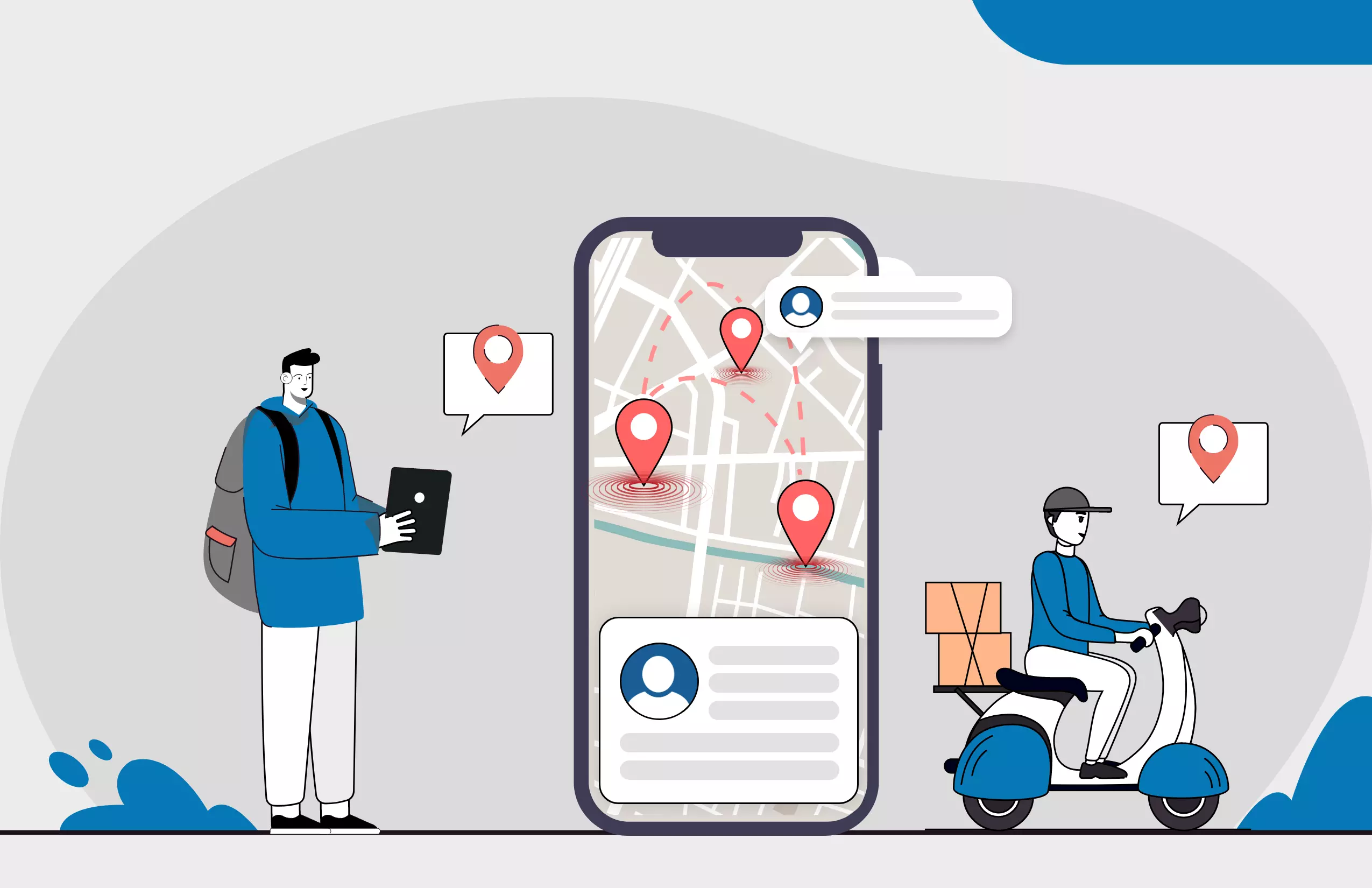
While remote sales reps use AI for drafting emails, field sales teams rely on AI for real-time location intelligence, route optimization, and automated visit check-ins.
How Fast Are Field Sales Teams Adopting AI in 2026
Table of Contents
According to a recent survey of over 4,000 sales professionals, AI is their favorite strategy for boosting business expansion this year. Sales teams claim that AI agents are crucial to expansion.
9/10 sales teams employ agents or plan to do so in the next two years. They list numerous advantages, such as raising customer retention and win rates.
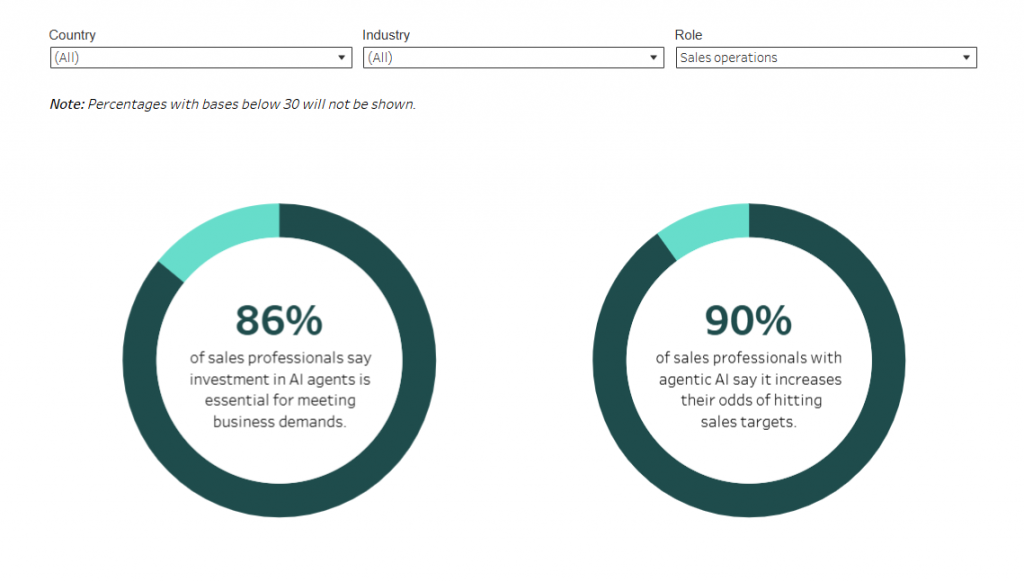
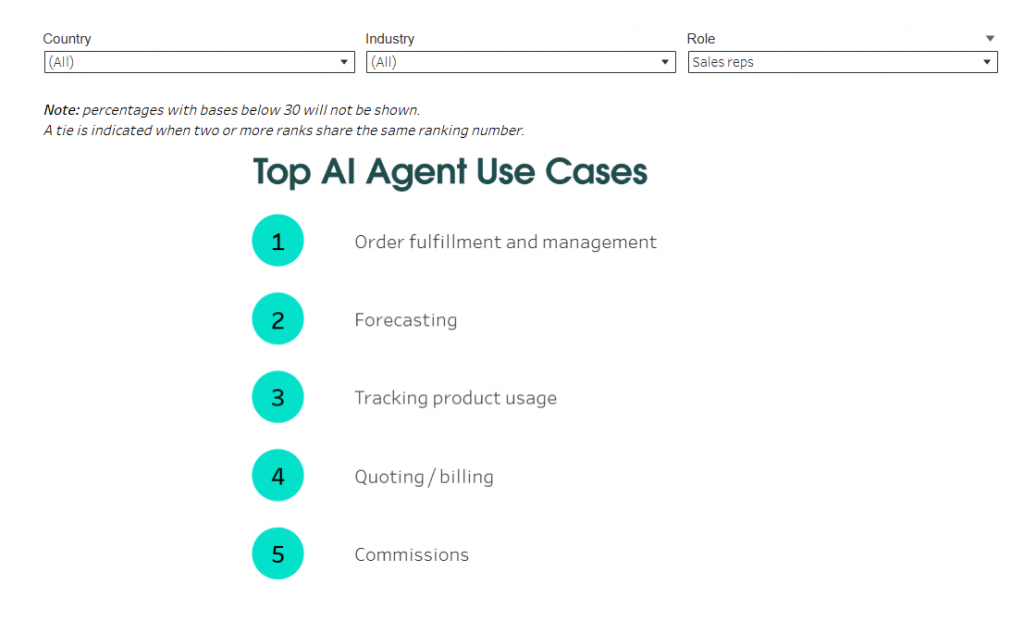
Source: https://www.salesforce.com/sales/state-of-sales/
Sellers are doubling down on AI agents and deploying them across the entire sales cycle: The use of AI in sales is already widespread: 87% of sales firms presently employ AI in some capacity for lead scoring, prospecting, forecasting, and email authoring.
The use of AI agents is growing rapidly: 54% of sellers claim to have employed agents, and almost 90% want to do so by 2027.
Top-performing sellers are 1.7 times more likely to use prospecting AI agents for outreach than underperformers.: 55% of sales professionals are adopting AI for prospecting in an effort to overcome the capacity gap, and another 38% intend to do so in the future.
According to 92% of sellers, using AI agents improves their prospecting efforts.
Enterprise AI is continuing to scale: All of the polls have a clear overarching theme: Bigger businesses (those with more than 1,000 workers) claim higher ROI, implement more use cases, and show wider adoption.
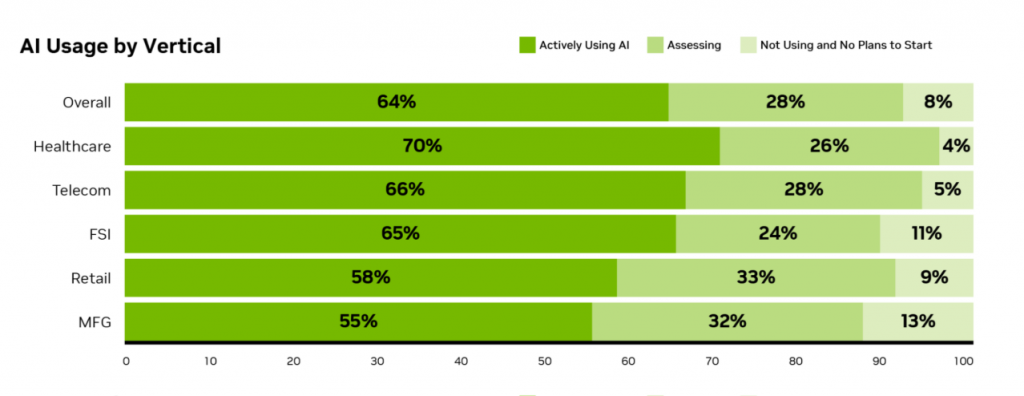
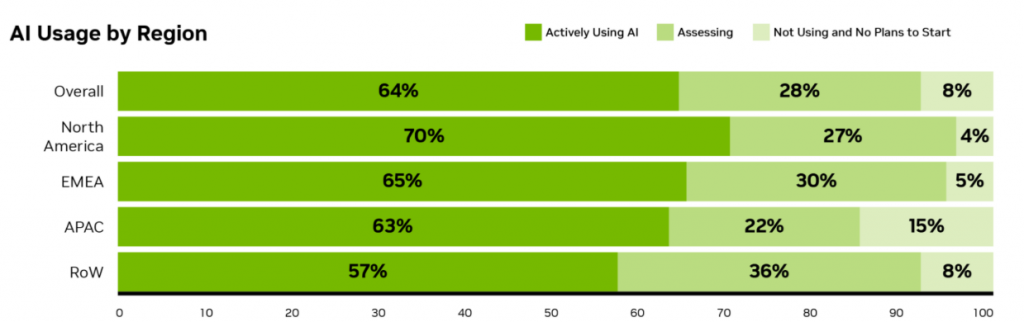
Source: https://blogs.nvidia.com/blog/state-of-ai-report-2026/
What does AI do for Business : Two-thirds (66%) of firms have reported improvements from enterprise AI implementation, with increased productivity and efficiency at the top of the list. The following are additional advantages that firms reported attaining:
Improving decision-making and understanding (53%)
Cost reduction (40%)
Improving customer/client interactions (38%)
Enhancing goods & services and promoting creativity (20%)
A 20% increase in revenue
74% of firms hope to increase revenue through their AI initiatives in the future, but just 20% are now doing so. Revenue growth is still primarily an aspiration. Source: https://www.deloitte.com/global/en/issues/generative-ai/state-of-ai-in-enterprise.html
The tool layer shows why the stakes keep climbing: After analyzing over 177,000 agent tools developed between late 2024 and early 2026, the UK’s AI Safety Institute discovered that in just sixteen months, the utilization of “action” tools-those that allow an agent to send an email, modify a file, or transfer money instead of just describing it-rose from 24% to 65%.
More quickly than most businesses are developing the controls to regulate such conduct, agents are putting suggestions into action. At that point, a careless deployment becomes a liability instead of a wasted pilot.
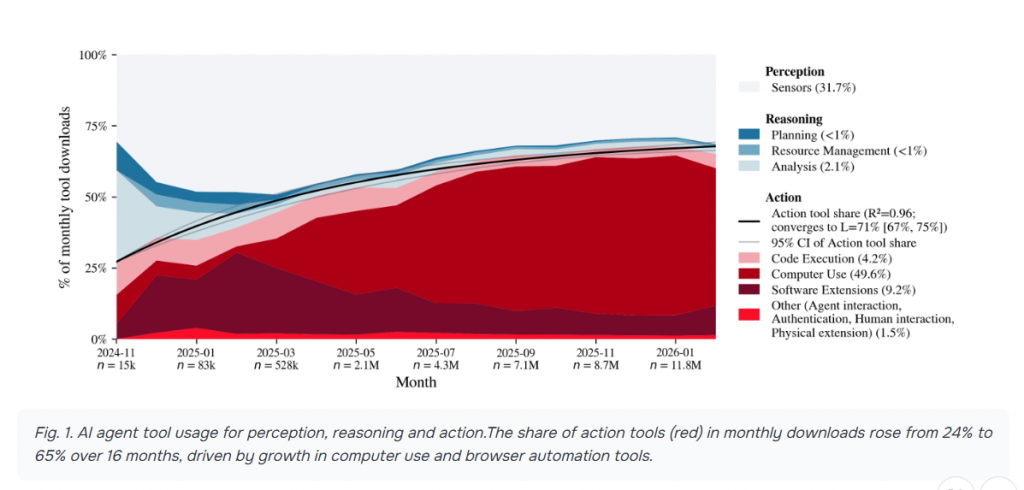
Source: https://www.aisi.gov.uk/blog/how-are-ai-agents-used-evidence-from-177000-ai-agent-tools
According to use cases in marketing and sales, strategy and corporate finance, and product and service development, revenue increases resulting from AI use are often. This is similar to what we have observed throughout the years that we began conducting the study.
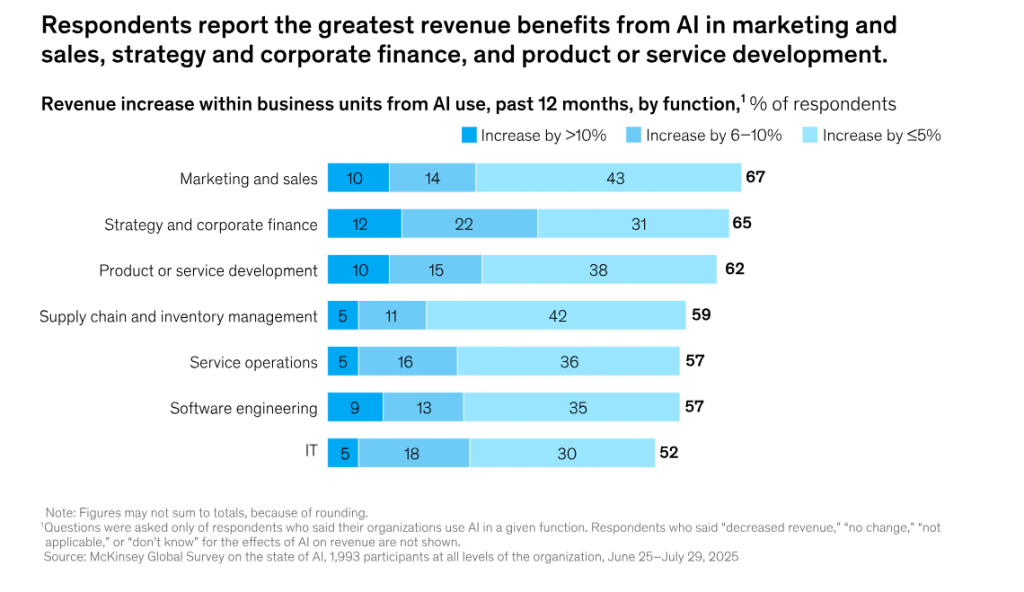
Source: https://www.mckinsey.com/capabilities/quantumblack/our-insights/the-state-of-ai
A significant implementation gap exists: It appears that many small enterprises are still in the early phases of adoption, since only 14% of them have fully integrated AI into their core operations. Concerns about data security and privacy (50%), a lack of technical knowledge (49%), and trouble selecting the appropriate AI tools (48%) were among the difficulties reported by many of those utilizing
AI. Small firms are aware that they need assistance: 73% of them state that their company would gain from having more access to the tools and training needed to successfully adopt and assess AI.
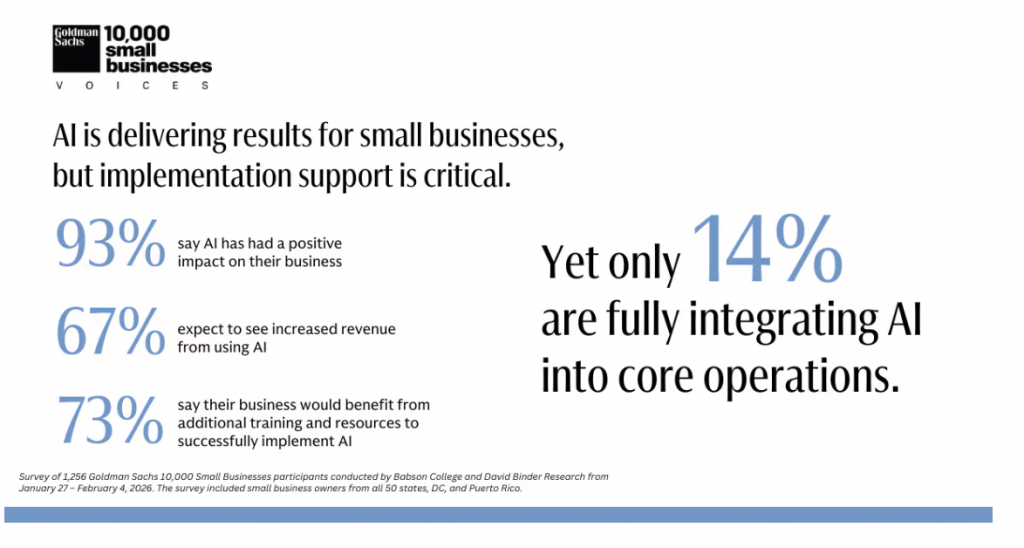
Source: https://www.goldmansachs.com/community-transformation/10000-small-businesses-voices/insights/ai-presents-a-major-opportunity-for-small-businesses
Does AI Actually Improve On-Field Sales Performance?
Offload and automate non-sales tasks drastically: Leaders have already delegated up to 50% of non-selling tasks to these groups while underperforming organizations consider whether to establish shared services centers. They are now aggressively automating both within these centers and throughout the sales organization, which has resulted in a 20% increase in sales team capacity. Top-quartile businesses have seen considerable cost savings and up to a 30% increase in sales productivity because of shared services architecture and technology.
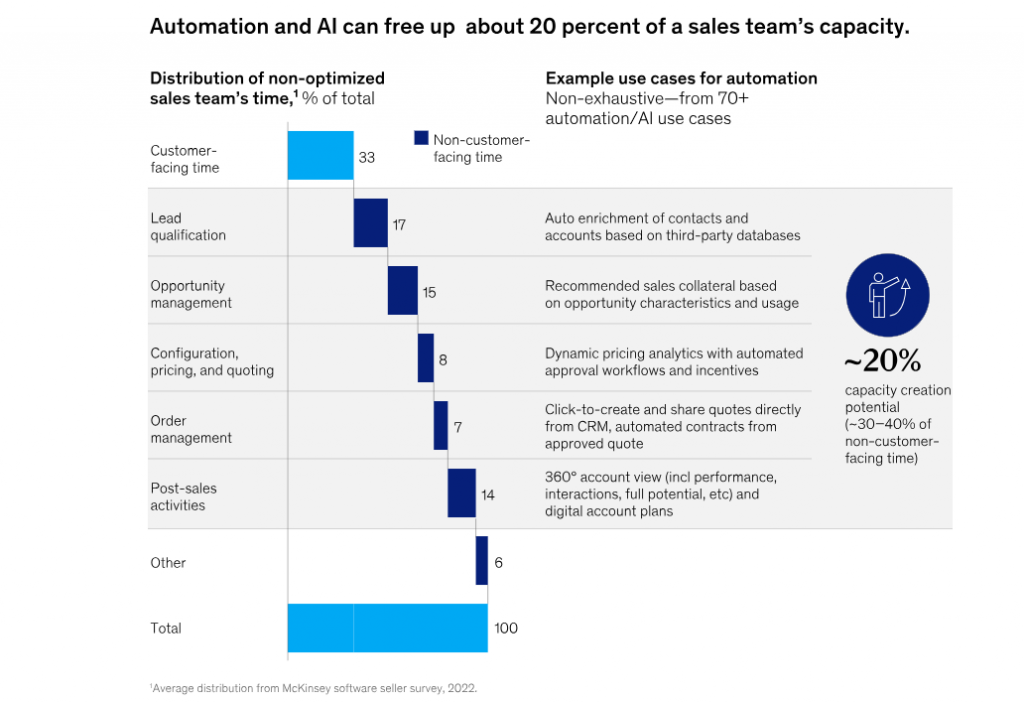
Source: https://www.mckinsey.com/capabilities/growth-marketing-and-sales/our-insights/how-top-performers-outpace-peers-in-sales-productivity
Gartner CSO & Sales Leader Conference: According to a Gartner, Inc. report, sales firms that offer sellers AI-enabled next best actions are 2.6 times more likely to experience commercial growth.
Organizations that emphasize upskilling sellers on AI are 2.4 times more likely to generate good revenue growth, according to a poll of 227 chief sales officers (CSOs) conducted from August to September 2025.
Where Human Sellers Outperform GenAI: Additionally, buyer data reveals areas in which human sellers still perform better than GenAI. In August and September of 2025, 645 B2B buyers participated in a poll that revealed the following:
- Compared to GenAI, they were 28 percentage points more likely to claim that a sales representative assisted them in moving on to the next stage of the buying process.
- 32 percentage points more likely to report feeling confident about the purchasing decision after speaking with a representative
- 39 percentage points more likely to believe a representative was aware of their requirements
- 21 percent more likely to state that a representative assisted in measuring the advantages for their company
Slowing growth is forcing sales teams to squeeze more from every rep: Sales teams are being forced to extract more from each representative due to slowing growth: AI’s rise in revenue organizations is not a coincidence. The research exposes a sad truth: Following a recovery in 2024, the average annual revenue growth of the companies surveyed slowed to 16% in 2025, a decrease of three percentage points from the previous year. Over the same time period, sales representative quota attainment decreased from 52% to 46%.
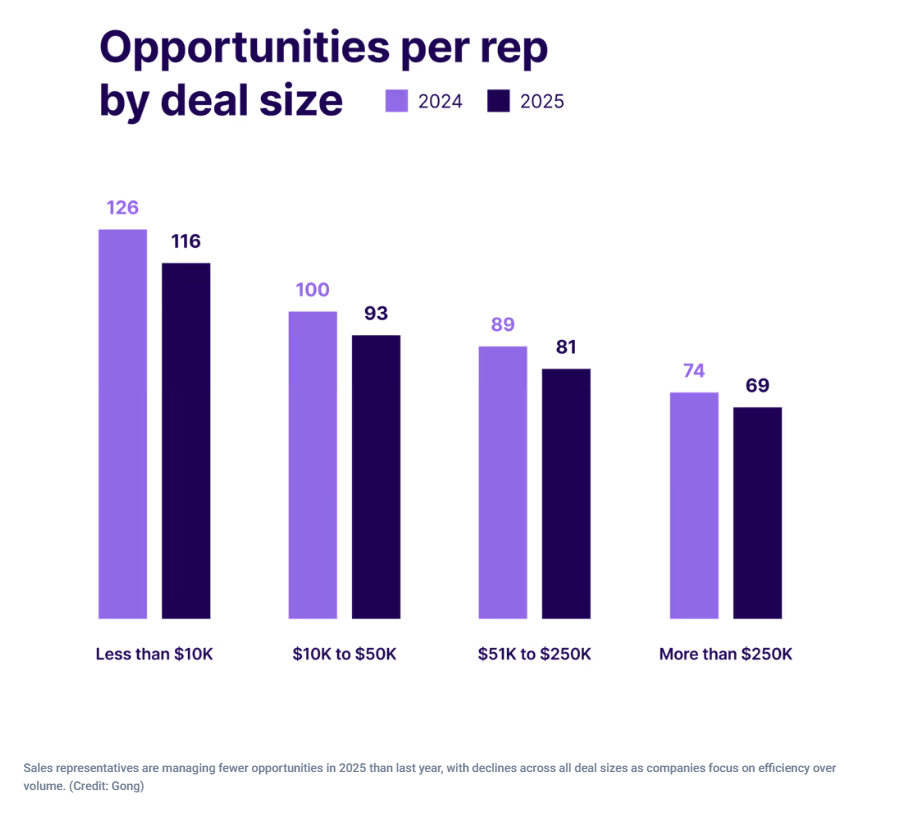
Source: https://venturebeat.com/ai/gong-study-sales-teams-using-ai-generate-77-more-revenue-per-rep
AI’s impact on sales performance and customer experience: The effect of AI on customer satisfaction and sales performance: AI has real and significant effects. More than half (52%) of C-suite executives, including sales leaders, report favorable performance results as a result of AI-powered workflows, demonstrating that C-suite leaders across industries realize AI’s revolutionary significance.
These executives examine financial outcomes and see improvements that go beyond efficiency. CRMs with AI capabilities and intelligent processes have a beneficial impact on customer happiness, conversion rates, and sales pipeline velocity.
Sales teams expect Net Promoter Scores (NPS) to increase from 16% in 2024 to 51% in 2026, primarily due to AI-enabled support and engagement. Source: https://www.ibm.com/thought-leadership/institute-business-value/en-us/report/ai-sales
How Big Is the AI-in-Sales Market? (Global Numbers)
Sales Intelligence Market Lates Insights 2026-2034: The worldwide sales intelligence market was estimated to be worth USD 4.85 billion in 2025 and is projected to increase at a compound annual growth rate (CAGR) of 11.10% from USD 5.37 billion in 2026 to USD 12.45 billion by 2034. With a 42.30% market share, North America dominated the global market in 2025.
Additionally, it is anticipated that the U.S. sales intelligence market would grow to a size of USD 2,855.0 million by 2032. The sales intelligence industry is expanding throughout developed economies due to the rising demand for competitive information and real-time customer insights.
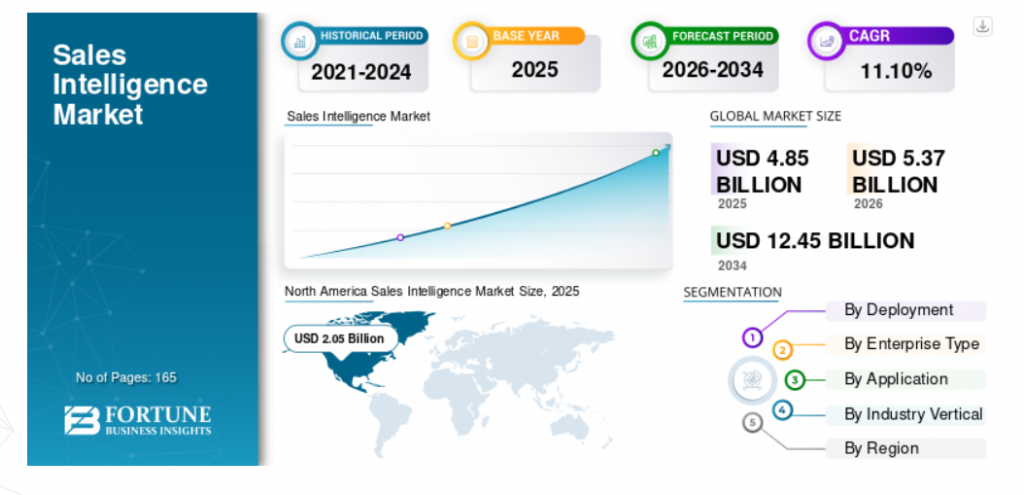
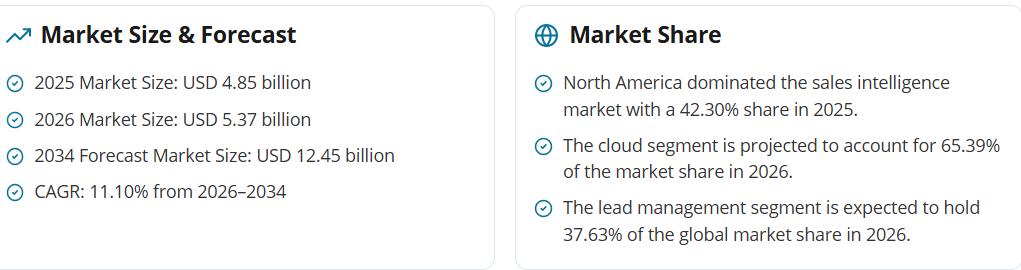
Source: https://www.fortunebusinessinsights.com/sales-intelligence-market-109103
North America continued to be a major player in the global market, with a 42.30% share of USD 2.05 billion in 2025 and a projected USD 2.25 billion in 2026. The market’s growth can be attributed to the early adoption of revolutionary technologies and digitization.

Source: https://www.fortunebusinessinsights.com/sales-intelligence-market-109103
The Asia Pacific market is projected to grow to USD 1.25 billion in 2026 from USD 1.1 billion in 2025, or 22.80% of the global industry. Information-intensive Artificial Intelligence (AI) and Machine Learning (ML) technologies are being actively implemented in a number of sectors in South Korea, Japan, and India, which is increasing the use of these tools.
Europe is expected to increase its revenue to USD 1.27 billion in 2026 from USD 1.16 billion in 2025, or 23.90% of the worldwide market. In Europe, the availability of specialized sales and marketing intelligence tools has slightly increased, leading to widespread adoption of these solutions.
AI for sales and market: The sales and marketing AI market is expected to grow at a compound annual growth rate (CAGR) of 32.9%, reaching USD 58.00 billion by 2025 and USD 240.59 billion by 2030. This trajectory highlights AI’s rise to prominence as a key facilitator of intelligent revenue operations, propelling change in lead generation, campaign optimization, and customer interaction. Enterprise need for predictive intelligence, hyper-personalized interaction, and automated revenue processes is driving an accelerated shift in the AI market for sales and marketing.
Market Size and Forecast:
Market Size: $40.78 billion USD in 2024
Market Size in 2025: $58 billion USD
Projected Market Size for 2030: USD 240.59 billion
Growth Rate: 32.9% CAGR (2025–2030)
Forecast timeframe: 2025–2030
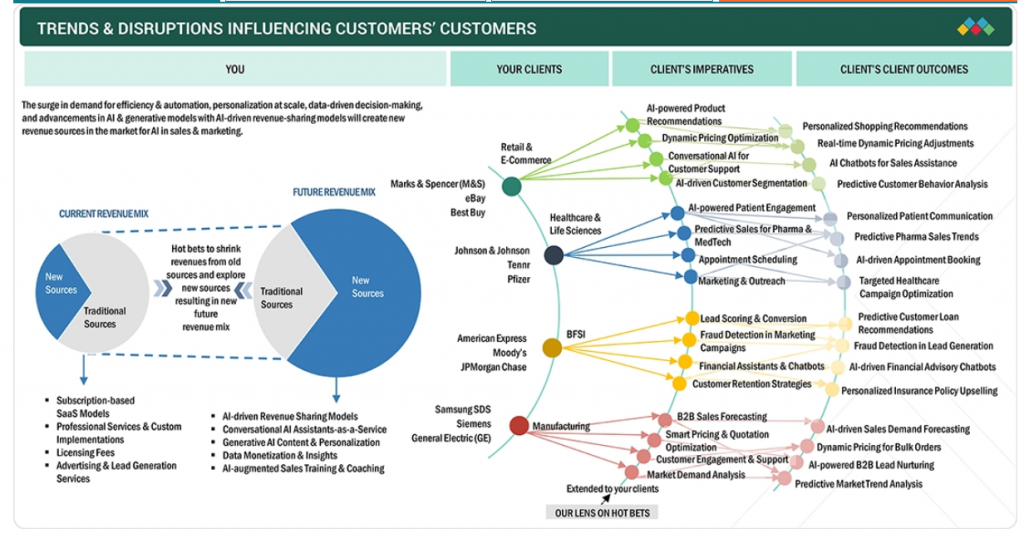
Source: https://www.marketsandmarkets.com/Market-Reports/ai-for-sales-and-marketing-market-45678598.html
AI agents, agentic AI, and the future of sales: According to Market.us (2025), the market for autonomous AI agents is expected to rise by 18 times, from $7.6 billion in 2025 to over $139 billion by 2033. Autonomous AI agents are undoubtedly the most revolutionary AI trend in personal selling and sales management to date due to their rapid rise. Source: https://www.sciencedirect.com/science/article/abs/pii/S0148296325006228#introduction
How Is Gen Z Field Reps Are Embracing AI Tools
The Generation Z Backlash Against AI: Despite their diversity, members of this generation are obviously opposed to AI. A Gallup survey of more than 1,500 individuals between the ages of 14 and 29 revealed a 14% decline in interest in AI since 2025. Just 15% disagree, and 37% believe that the dangers and advantages of AI in the workplace are comparable. Of Gen Zers who are employed, 48% believe that the risks outweigh the benefits.
The Pro AI Gen Z Cohort: Despite the apparent backlash against these technologies, many Gen Z employees are enthusiastic about AI. Compared to 40% of millennials, 29% of Gen X, and 25% of Baby Boomers, 43% of Gen Z are considered AI “super-users,” the largest percentage of any generation, according to the WRITER survey mentioned above.
In a similar vein, according to a MOO study that polled 1,000 workers, 76% of Gen Z workers believe AI is driving them toward higher-level jobs, compared to 56% of millennials and 48% of Gen X workers. Source: https://www.forbes.com/sites/timkeary/2026/06/22/generation-z-arent-sold-on-ai-and-its-limiting-enterprise-adoption/
Younger Gen Z field reps prefer AI-powered mobile apps for automated attendance and meeting notes over traditional, tedious manual logging.
Administrative friction is hitting the lower rungs of the career ladder hardest:
The grunt work tax is real: Gen Z representatives only spend 35% of their time selling, compared to the average seller’s 40%. This means that they lose about two full hours per week to manual data entry, which senior representatives use to research prospects and cultivate relationships.
They’re also dealing with a lack of mentorship:
46% of salespeople seldom receive feedback on their talks.
47% of them don’t have enough chances to roleplay before a consumer calls.
Gen Z cites a lack of management time as the biggest barrier to effective enablement, while millennials, Gen Xers, and baby boomers refer to a lack of data and insights.
What happened? Gen Z is looking for a way out. Lack of opportunity for promotion is the main reason why they are more willing than any other generation to quit their jobs.
Source:
The Productivity Gap: New Survey Shows 9 in 10 Sellers Are Betting on AI and Agents To Help
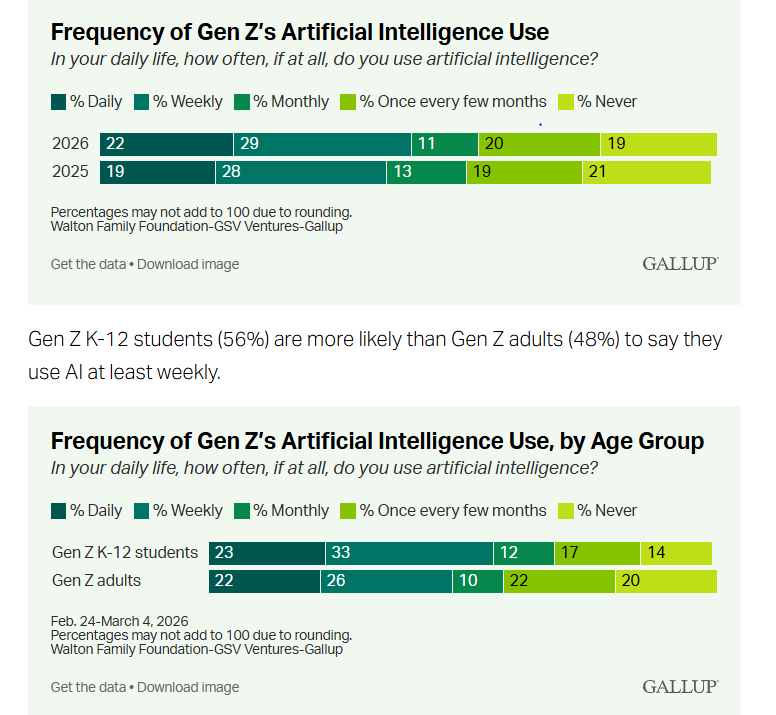
Gen Z’s AI Adoption Essentially Unchanged From 2025: Since March 2025, Gen Z’s use of generative AI in daily life has been mostly constant. Of those between the ages of 14 and 29, around half (51%) still claim to use AI either daily (22%) or weekly (29%), while 11% report using it monthly, 20% every few months, and 19% say they never use it. (For the sake of this study, generative AI is defined as technology that can produce new content based on instructions, such as writing, brainstorming, or image creation.)
Source: https://news.gallup.com/poll/708224/gen-adoption-steady-skepticism-climbs.aspx
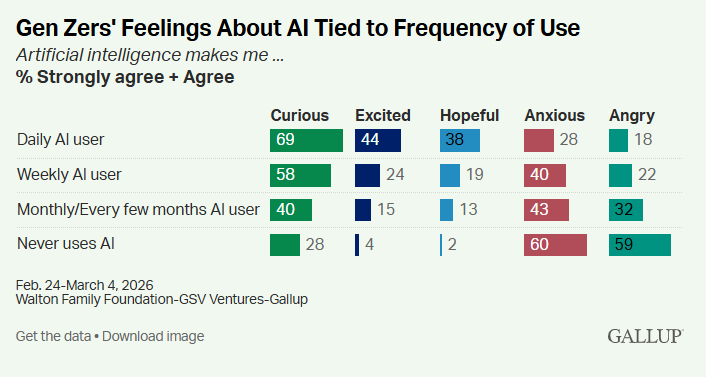
Familiarity Associated With More-Positive Perceptions: Gen Zers’ feelings about AI are closely tied to how frequently they use it. Among daily users, 69% report feeling curious, 44% excited and 38% hopeful about the technology. This compares with 28% who are curious among those who never use AI, along with 4% excited and 2% hopeful.
Meanwhile, negative emotions about AI are far more prevalent among nonusers, with 60% reporting anxiety and 59% anger, compared with 28% and 18%, respectively, among daily users.
Source: https://news.gallup.com/poll/708224/gen-adoption-steady-skepticism-climbs.aspx
AI adoption is accelerating faster than organizational readiness: Nearly three-quarters of Gen Zers (74%) and millennials (74%) say they use AI in their daily jobs. For the most part, they view the spread of AI as an accelerant rather than a danger, anticipating that it will increase productivity, free up more time, open up new career routes, and provide entry-level workers with new options. However, many also believe that they are embracing AI more quickly than their companies. Source: https://www.deloitte.com/global/en/issues/work/genz-millennial-survey.html
Wrapping Up
Every phase of the sales cycle, from lead generation and forecasting to client engagement and post-sales support, is being transformed by AI. Businesses engaging in AI-powered sales methods are achieving quantifiable increases in productivity and income, according to the most recent adoption figures and ROI trends for 2026.
Businesses that engage in intelligent automation, data-driven insights, and ongoing sales enablement will be best positioned to prosper in the AI market. AI is no longer just for big firms, companies of all sizes can boost field sales performance and remain competitive.
Businesses that use AI now will respond to client demands, adjust to shifting market conditions, and promote long-term growth.