What is a Traveling Salesman Problem?
Table of Contents
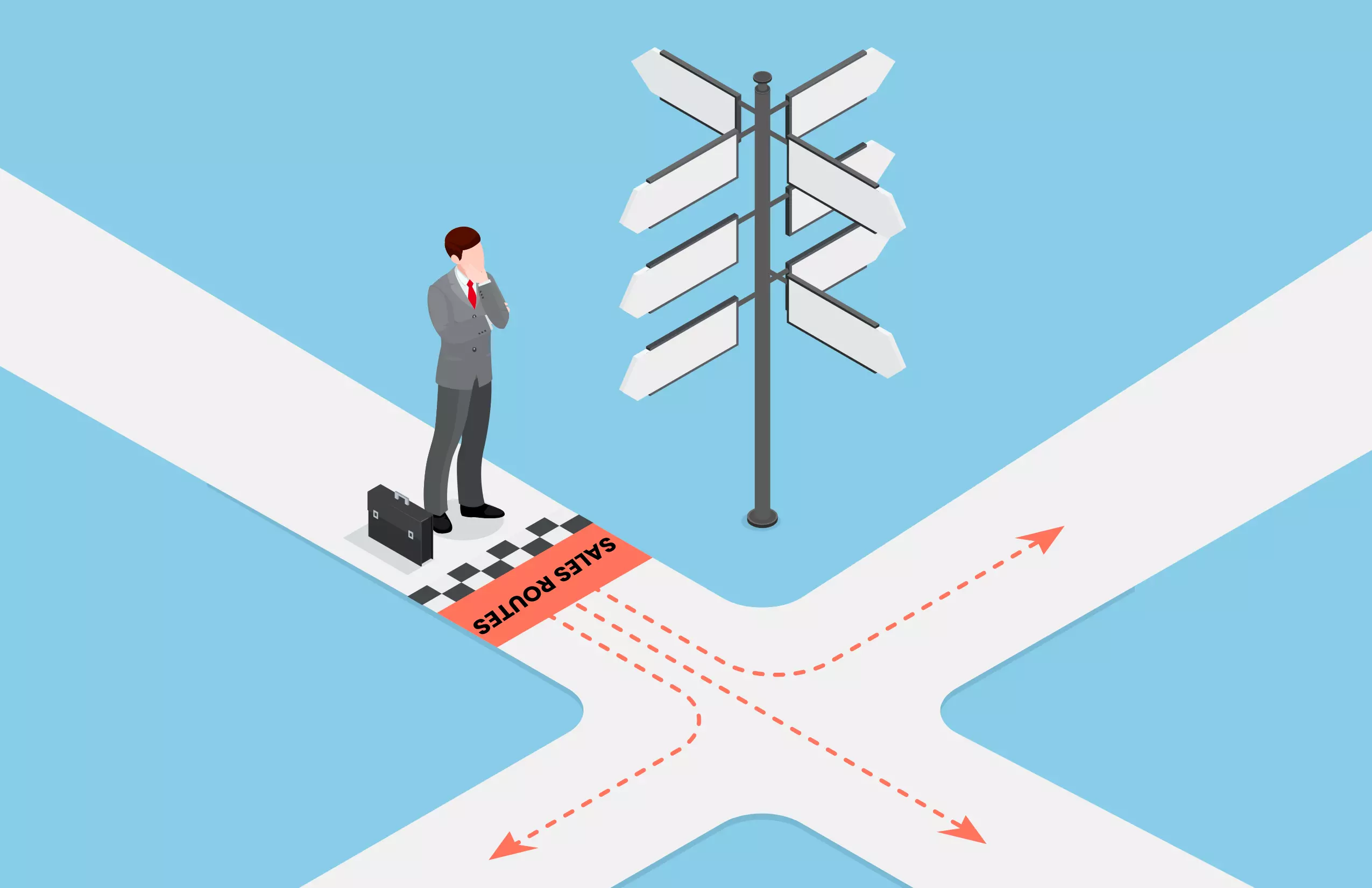
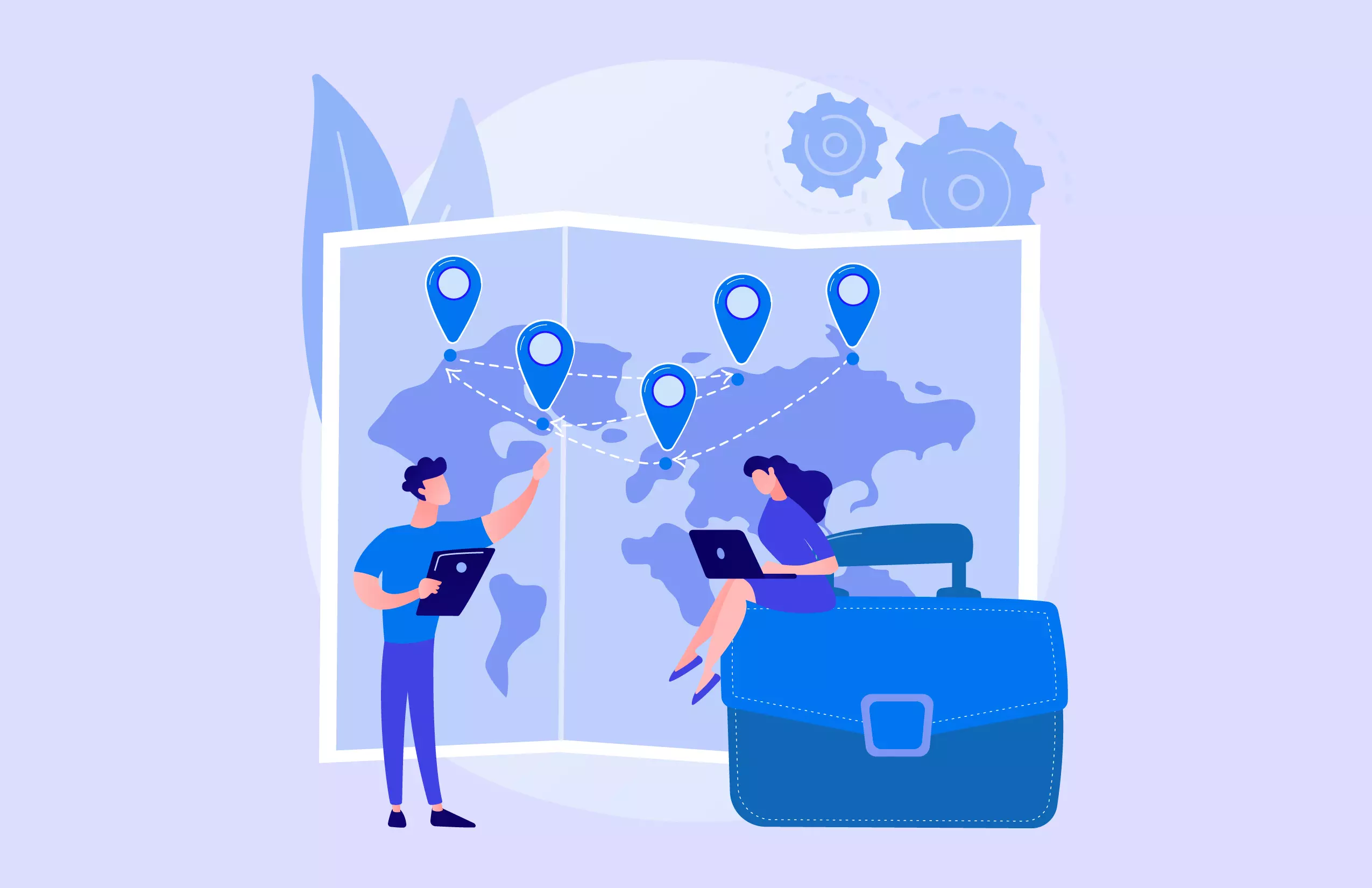
The purpose of the Traveling Salesman Problem (TSP), an optimization problem, is to determine the shortest path between a given set of cities and the distances between each pair of cities. It makes sure that each city is visited precisely once before returning to the starting point. To put it another way, it involves figuring out the quickest route that visits every place on the list. The process adheres to the requirement that the journey start and finish in the same location, usually the home city of a traveling salesperson.
TSP is a well-known example of a combinatorial optimization problem. It is NP-hard, meaning that the complexity of the issue rises exponentially with the number of cities, making it computationally challenging to discover the best solution for large instances of the problem.
Let’s imagine,
What do you think?
Will it be easy?
No, not exactly.”
The term Traveling Salesman Problem (TSP) is one of the most well-known mathematical puzzles in history, and is the source of the routine activity.
Additionally, this problem has a direct effect on your fuel expenditures, delivery costs, customer happiness, and sales success, whether you are aware of it or not.
Let’s find out how.
What’s the Issue with Travelling Salespeople?
The Traveling Salesman Problem poses a seemingly straightforward query:
What is the shortest path that makes one stop at each place and then returns to the beginning point?
It sounds realistic.
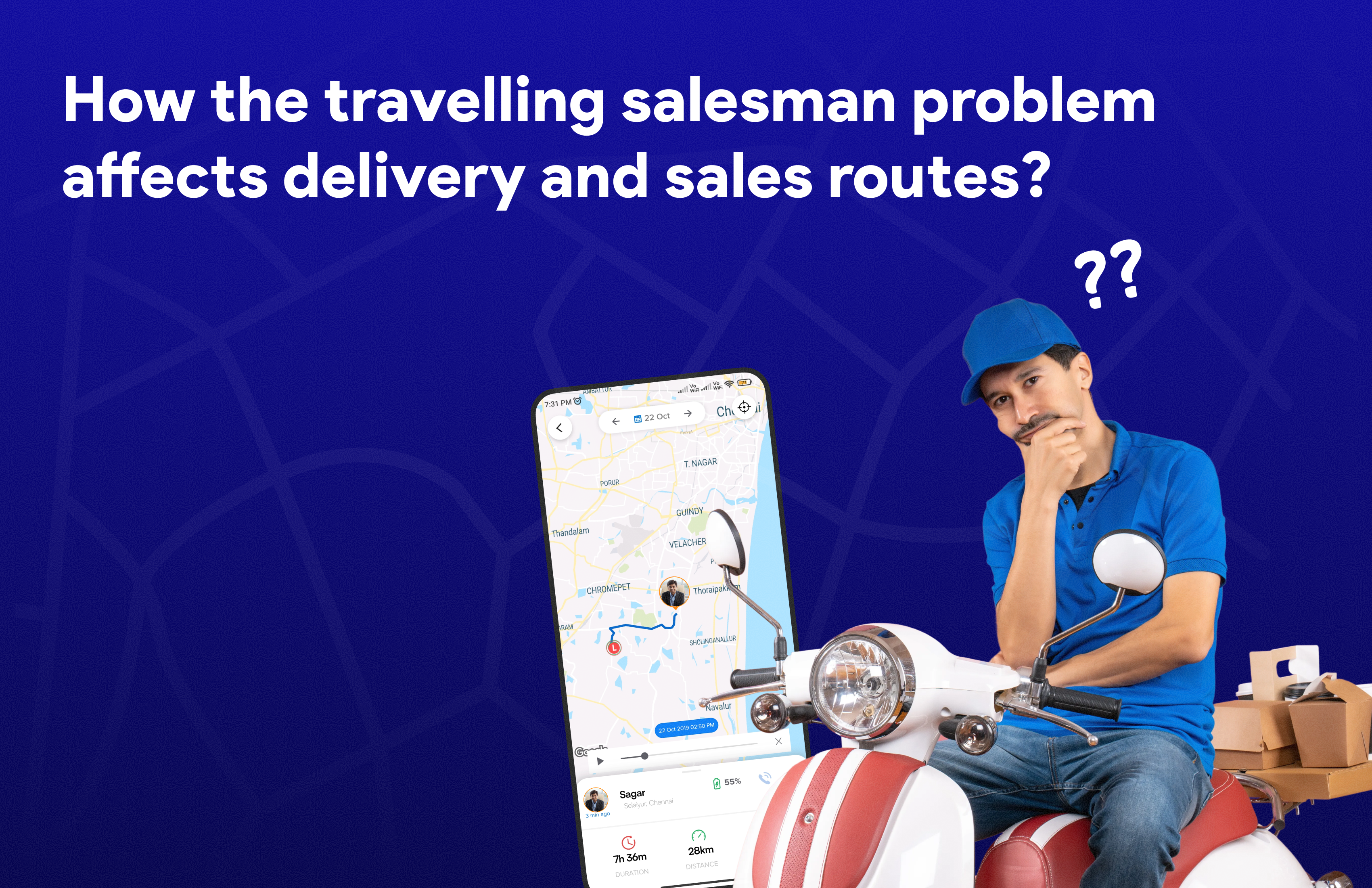
For example, let us assume a travelling salesman takes a route for his daily work. He takes the possible route with a certain number of stops.
But if a route expands beyond a few stops, a human can’t determine the optimal route manually.
And that’s the precise problem that affects:
- Delivery businesses
- Field sales groups
- Logistics companies
- E-commerce companies
- Service technicians
Now let’s dive in deeper.
How TSP Impacts Delivery Routes
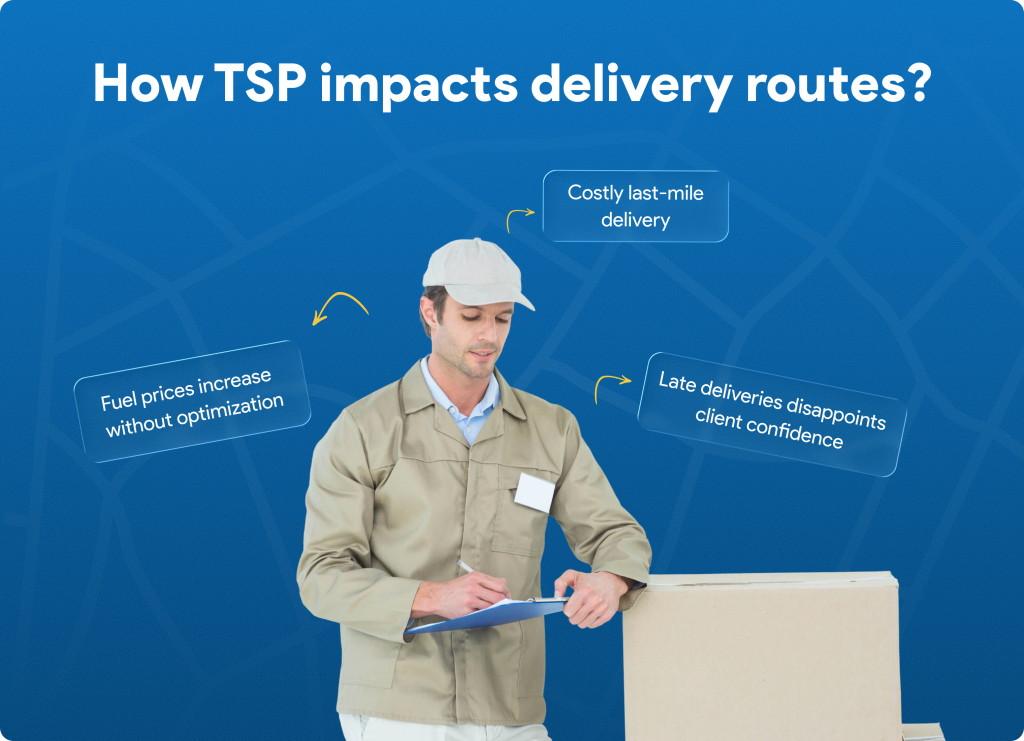
1. Fuel Prices Increase Without Optimization
If your drivers use ineffective routes:
- They put in more miles of driving.
- Burn more gasoline.
- An increase in vehicle breakdown
Businesses of moderate size may save thousands of dollars a year with even a maximum increase in route efficiency.
Increase that by several fleets? The numbers rise to enormous levels.
2. Late Deliveries Disappoints Client Confidence
Customers will expect:
• Same-day shipping
• Reliable ETAs
• Prompt service
Ineffective route planning results in:
- Lost time frames
- Shipments that are delayed
- Unfavorable opinions
3. Costly Last-Mile Delivery
The most costly aspect of delivery is frequently the “last mile.”
Without resolving a variation of the Traveling Salesman Problem:
• Drivers reverse their course
• Overlapping routes
• In areas with high traffic, time is lost.
Route optimization software such as Lystloc that employs TSP-based algorithms is used by modern logistics firms to minimize last-mile inefficiencies.
On the other hand, let’s also examine how TSP affects sales routes:
TSP’s Effect on Sales Route Planning
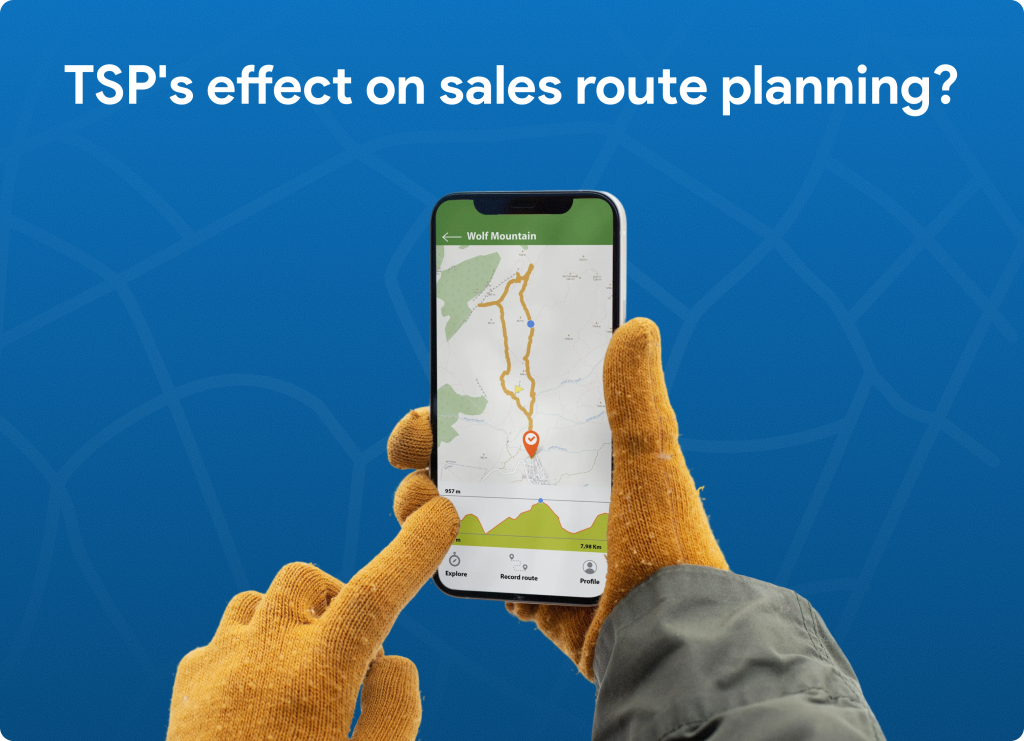
Packages are only one aspect of it.
Sales teams deal with the same issue every day.
1. Reduced Daily Meetings
An ineffective sales channel entails:
• Less time spent on sales
• Longer driving
• Fewer visits from clients
Optimized routes enable representatives to reach more potential customers.
• Cut down on travel tiredness
• Expand the possibility for revenue
2. Increased Cost of Purchase
As the duration of the journey increases:
• Fuel prices increase
• Decreases in productivity
• A decline in ROI per sales representative
Smart route optimization increases time spent on producing money, while lowering operational expenses.
Look at a practical example
Assume a local delivery service has:
- Every day, each vehicle makes 42 stops.
- 18 drivers.
- Traveling 250 miles a day on average
If a 18% daily distance reduction is achieved by route optimization, then every day a good number of miles are saved, and thus optimizing the route efficiency.
Solving a mathematical issue can result in fuel savings, less maintenance, and lower carbon emissions.
That’s where Lystloc emerges as a boon to resolve your traveling salesman problems.
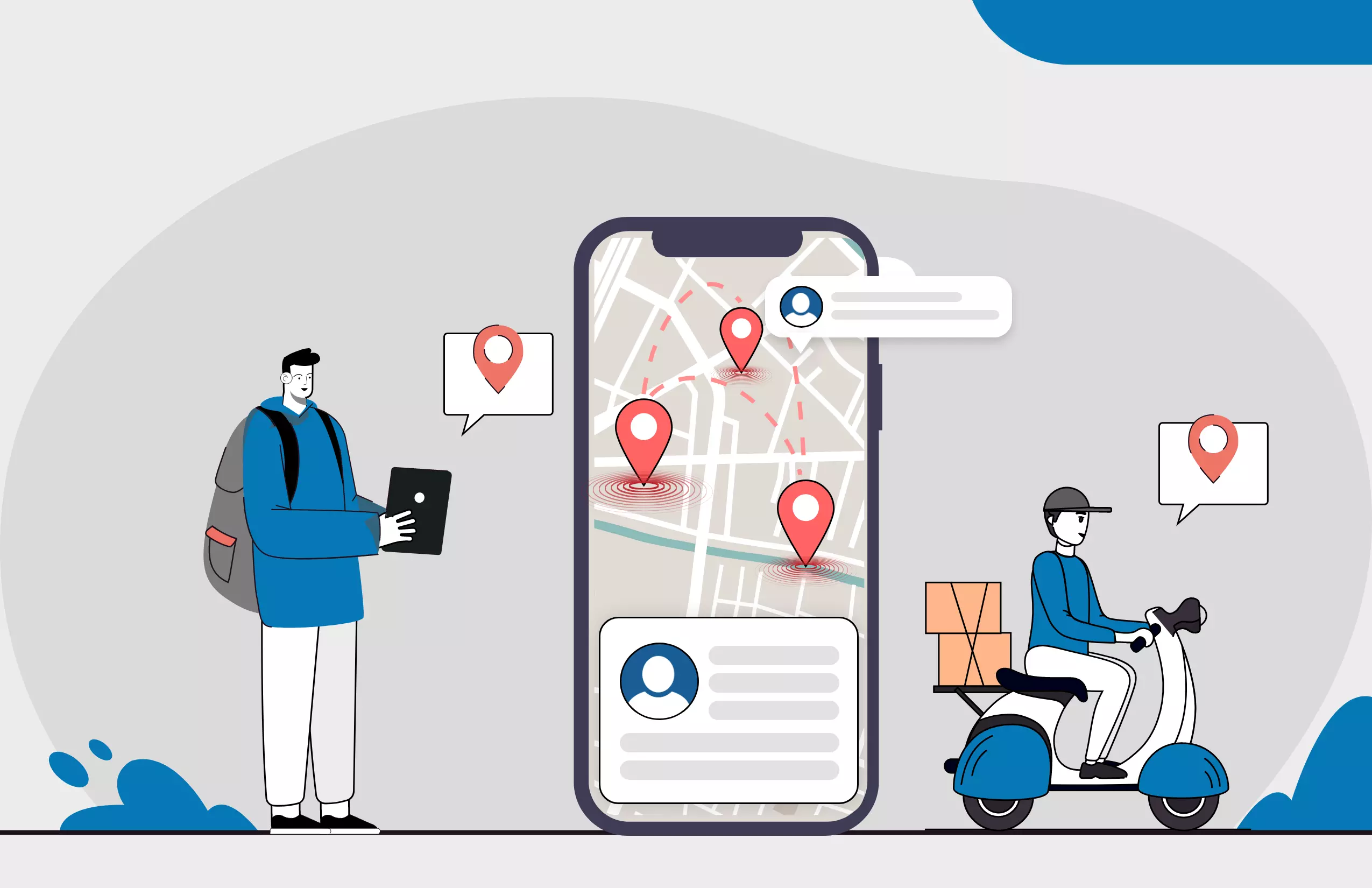
Lystloc has a route optimization feature, where your drivers can find the best route with the shortest distance and reach the client’s location. You can additionally calculate how much distance they covered and how long they spent at the client’s place, with the live field sales report.
We will explain the complete feature set and also offer you a 7-day free trial that is best suited for your industry type
Just book our free demo here!Why Companies Cannot Handle TSP
In mathematics, this issue is referred to as an NP-hard problem. This implies that no easy formula can identify the ideal answer for big datasets in an instant.
Modern companies instead depend on:
- AI-driven software for route optimization
- Heuristic algorithms
- Real-time statistics on traffic
- GPS-enabled devices
Within seconds, these systems discover the most efficient path imaginable, not just a “good” one.
Route Optimization’s Competitive Advantage
TSP-based route planning benefits businesses in the following ways:
- Reduced fuel expenses.
- Better customer satisfaction,
- More daily sales visits,
- Quicker delivery, and
- Improved operational effectiveness
For businesses such as food delivery, field services, e-commerce, and business-to-business sales, this edge might make the difference between growing and staying the same.
The Invisible Price of Ignoring Optimization of Routes
If you’re not optimizing your routes, you are probably
• Spending more money than required on fuel
• Every day, productive hours are lost
• Lowering your team’s earning capacity
• Delivering less quickly than rivals
Ineffective routing is not only annoying but also costly in a world where customers want same-day service.
Wrapping Up
The idea of the traveling salesman problem is not limited to classrooms.
It is the unseen force that powers online delivery networks, food delivery apps, and courier networks.
Field sales automation is an intelligent platform for logistics, where you can optimize your path and your time is saved. Your money is saved with each mile and profit grows with each productive day.
The next time a salesperson squeezes in another meeting or a package arrives early, keep this in mind:
You just benefited from a centuries-old mathematical riddle.