When you manage a field team, you might face different issues. Starting from field attendance to field report, you need to cross-check for every field activity. The field report is the most crucial thing in every field sales.
So, you need a trusted automated system in a field business. Let’s look into that part with a clear explanation of why your field team is lying to you.
The Perfect Field Report
Table of Contents

Let’s assume an example:
The majority of field reps are not bad guys, they are just juggling impossible schedules with broken tools. The actual causes:
• Manual processes that reward speed over accuracy
• No real-time visibility on where the team actually is
• Metrics that reward visit quantity, not visit quality
• No consequences for inflated reports – until it’s too late
• No support, just a figure-it-out-yourself culture
One of the most expensive blind spots in field operations is the gap between what is reported and what is real.
6 Pain Points Hidden in Your Field Reports

1. Fake Client Visits
A rep logs a visit they never actually made – perhaps they just drove by. Imagination is where territory coverage, expenses, and strategy all get built. Twenty reps faking one visit a week, nearly 1,000 fake interactions a year, and potentially fifty thousand dollars in lost order value.
2. Copy-paste Reports
Some people will follow up-same notes, every rep, every day. There is no real market intelligence to go on – no competitor moves, no stores in trouble, no real opportunities.
3. False Estimate of Mileage and Expenses
Distances claimed creep up without GPS verification. Each one is small, but 30 times a year adds up to serious money – and points to a deeper breakdown of trust.
4. The Productivity Assumption
Ten visits a day sounds great, except six of them last less than four minutes. That’s not selling. That’s checking the box. You’re paying for a full day’s activity with none of the meat.
5. Reporting Lag
Visited Monday, report filed end of week, manager responds next Wednesday. At that point, the out-of-stock issue has cost four days of sales, and the competitor has already won the shelf.
6. The Accountability Space
When things go wrong, everyone points the finger at someone else. Reps blame the routes, managers blame the reps. Without verifiable activity, nothing changes, and the same holes stay.
The Underlying Cause
Field teams get a form or a spreadsheet and are asked to self-report their own performance, with no tools, no support, no accountability layer.
Of course the data gets blurry. It’s not the individuals. It’s the system.
What the Fix Looks Like
Tools like Lystloc have better efficiency than traditional tools.
The goal isn’t surveillance – it’s making accuracy easier than inaccuracy.
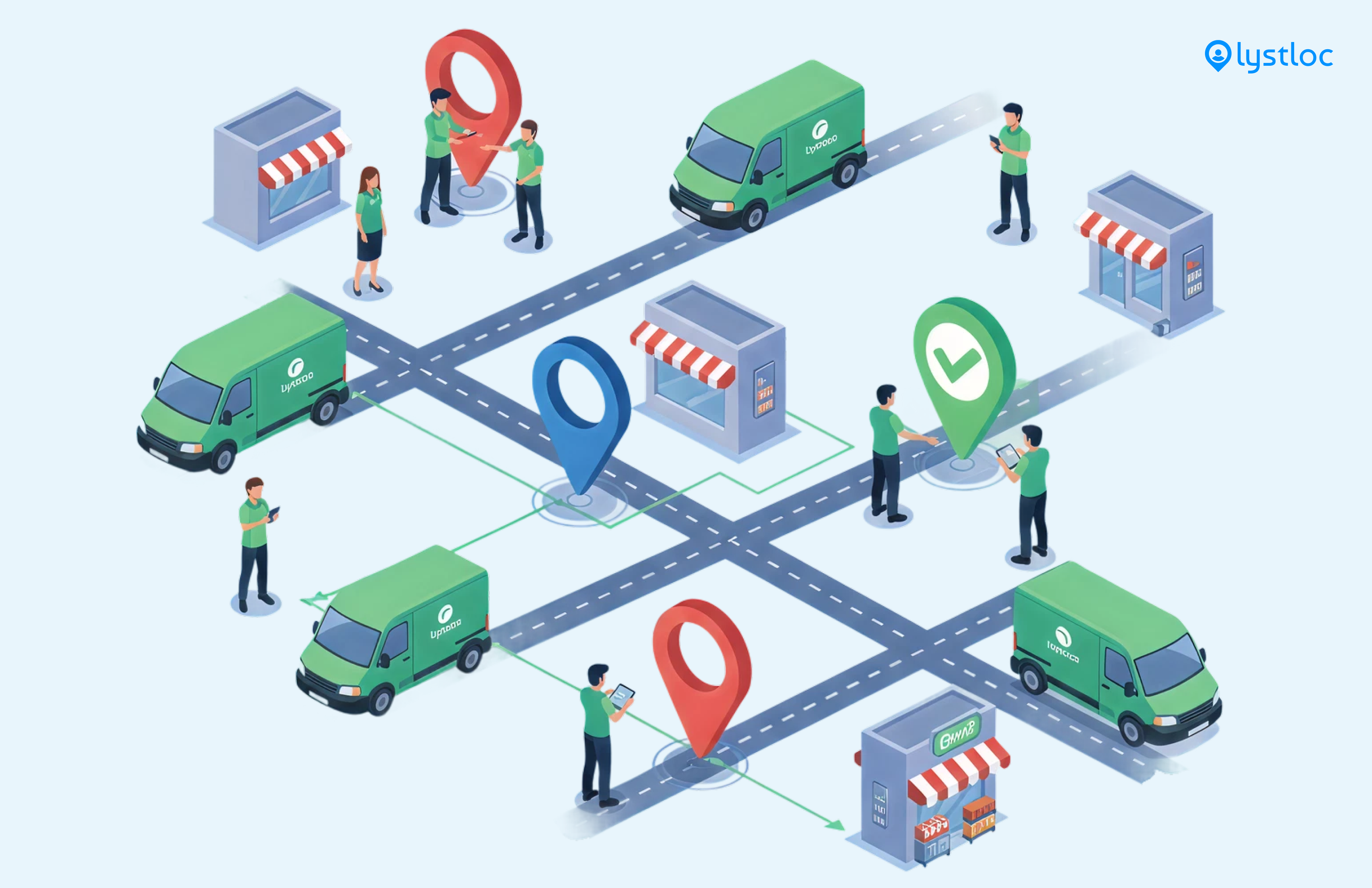
Real-Time GPS Verification
Check-ins happen only when the GPS is at the store location. No need for confrontation; the system works. Ghost visits go down to nearly zero in one month.
Smart Forms with structure
Reps don’t have an open notes field but answer specific questions, such as shelf fill % out-of-stock SKUs, competitor activity, and manager feedback. Same time investment, 10x better data.
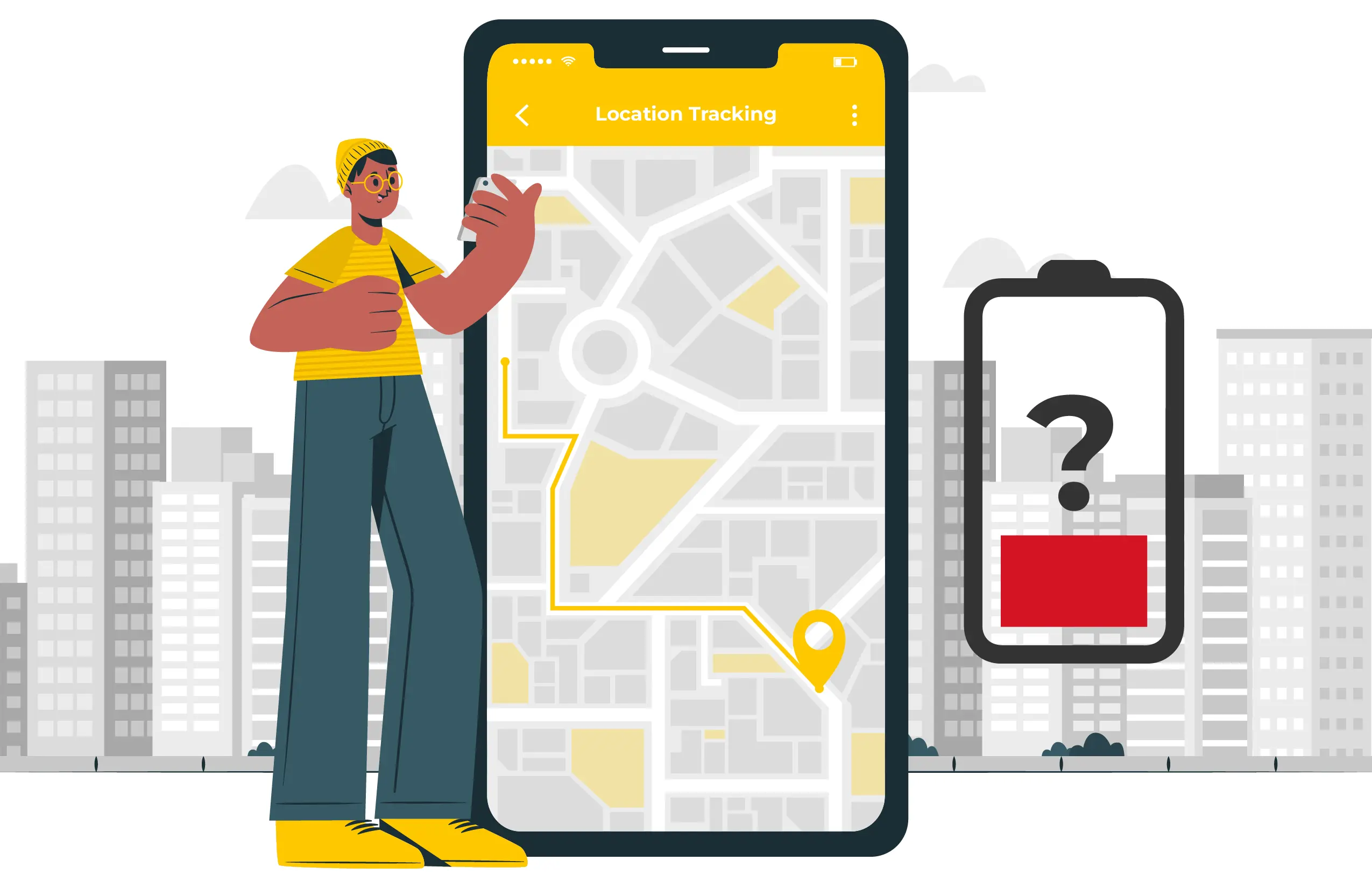
Automated Mileage Based on Real Routes
Claimed mileage is replaced by GPS-tracked movement. There is no need for human claims or verification because reimbursements become accurate immediately.
Live Dashboards
In a matter of hours, rather than waiting until Monday’s report, managers can see who is now in the field, which stores are covered vs planned, and which regions are lagging.
Optimized Beat Plans
Instead of speculating on how to spend their day, representatives carry out a plan based on geography, priority, and realistic travel time.
Manager Alerts
An out-of-stock flag, a store that hasn’t been visited in seven days, or a representative’s visit count declining all set off automated alerts, allowing action to be taken while there’s still time.
The Evolution

Arun’s team implemented a field force automation platform six months after the furious phone call.
Before: weekly reports, 22 self-reporting representatives, 8–10 daily reported visits, and no GPS verification.
Now: organized forms, real-time dashboards, GPS-verified check-ins, and six to seven real visits per day.
The number of visitors decreased because half of the previous visits were fraudulent. The dishonest representatives were no longer able to stretch their figures because they were already achieving 6-7 actual visits.
The outcomes that mattered:
Three months later,
- Retail complaints were 70% lower.
- 62% fewer out-of-stock cases
- 21% increase in order value per visit
- 99% accuracy in expenses
- Two constant underachievers chose to leave.
- The team became honest instead of getting bad. It turns out that being honest was more profitable.
Do You Think Your Field Team Is Lying?
Then think of these five questions:
1. Could you tell where each representative is at the moment?
2. Are you able to confirm that a recorded visit took place?
3. When was the last time a representative reported an issue rather than good news?
4. What occurs if no one visits a priority store for two weeks?
5. Do expense reports ever get verified?
If “no” or “nothing happens” are the most common responses, you have a data integrity issue that is costing you more than you think.
The Problem Is Solvable
Field data gaps are not unavoidable. Rather, they are the consequence of procedures that have not kept up with technological advancements. The proper approach eliminates the friction that leads to poor reporting in the first place by making honesty the simple route, providing managers with genuine visibility, and giving representatives clarity.
Your field crew isn’t lying because they’d like to.
They’re making it through a flawed system. Make the system work with
Lystloc, and the truth follows.
Book a free demo and see Lystloc in action.