In order to prevent borrowers from harassing people who fail to make their EMI payments, the Reserve Bank of India (RBI) has developed new regulations.
Banks and regulated lenders will be subject to more stringent regulations. Under its new debt recovery framework regarding:
- How they communicate with borrowers,
- What recovery agents can say,
- When they can call, and
- How they perform field visits.f
On January 1, 2027, the regulations will take effect.
Under a formal regulatory framework, the RBI has also introduced technology-led recovery, such as remote locking of funded laptops, tablets, and cellphones.
What Are RBI’s 2026 Rules for Loan Recovery Agents? (Contact Hours, Notice, ID & Conduct)
Table of Contents
The new regulations provide a precise window for recovery visits and calls.
Contact window: Only between 8:00 AM and 7:00 PM are agents permitted to call or visit. Regardless of how past due the debt is, contact outside of this window is considered harassment.
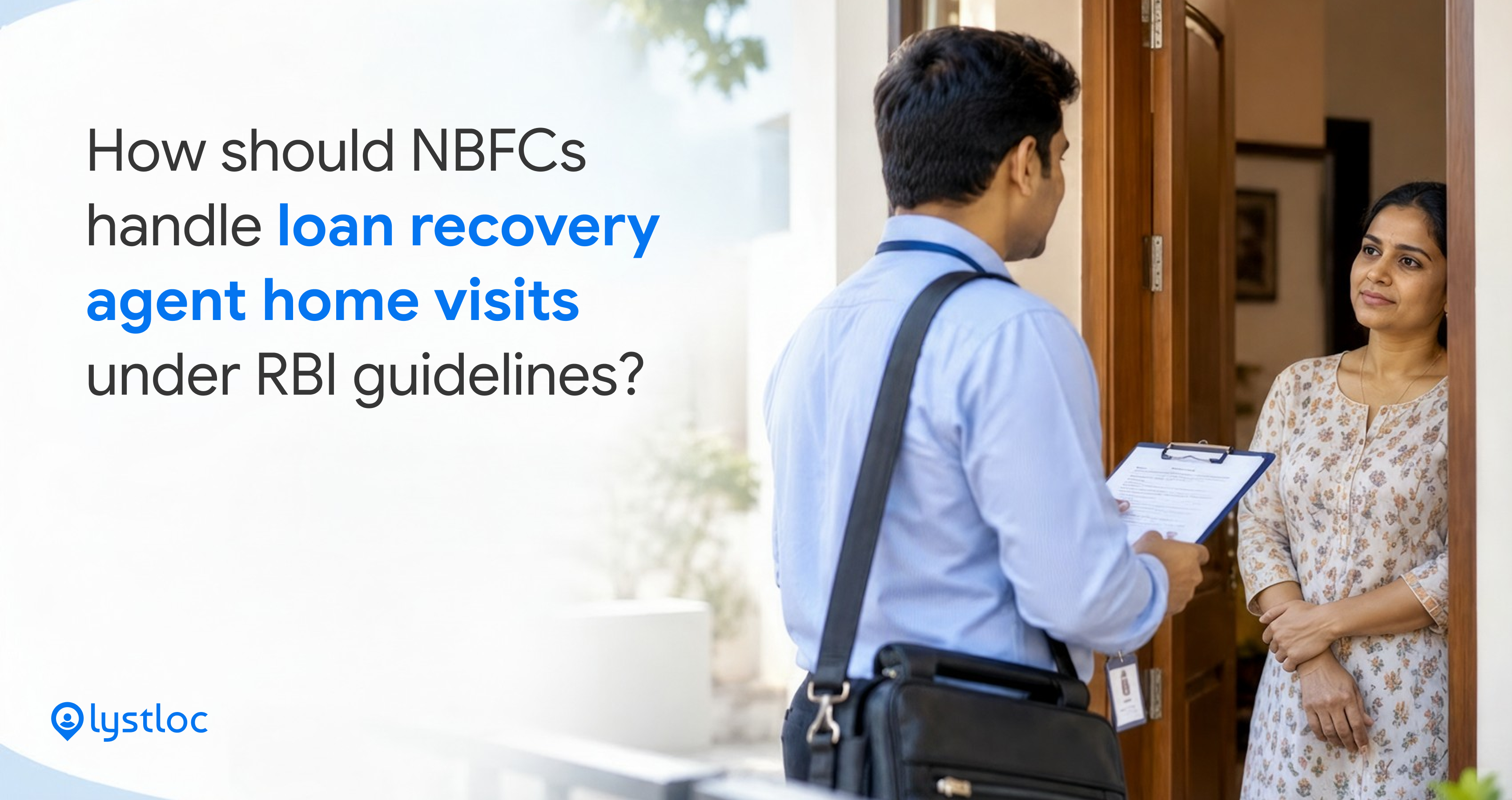
Prior notice: The borrower must be informed in advance of a home visit. Particularly on a first visit, agents are not allowed to arrive without warning.
Identification: Each agent must have a current ID card and a letter of authorization from a bank or NBFC, which they must present upon request.
Behavior: Threatening, abusive, or intimidating language is likewise prohibited by the RBI. Agents are not allowed to contact borrowers frequently, conduct anonymous or intimidating calls, publicly embarrass them, or threaten their family, property, or reputation.
Third parties: Except for co-borrowers or guarantors, agents may not contact or share loan information with the borrower’s family, employer, neighbors, or coworkers without permission.
Consent to enter: The borrower may decline entry even if given warning. Under no circumstances is forced admission allowed.
Additionally, they cannot abuse social media. It is not permitted to post a borrower’s private information, images, films, or audio recordings in order to humiliate them.
These are not recommended methods. They serve as the standard that your SOP must adhere to.
Who Is Liable If a Recovery Agent Violates RBI Rules the NBFC or the Agency?
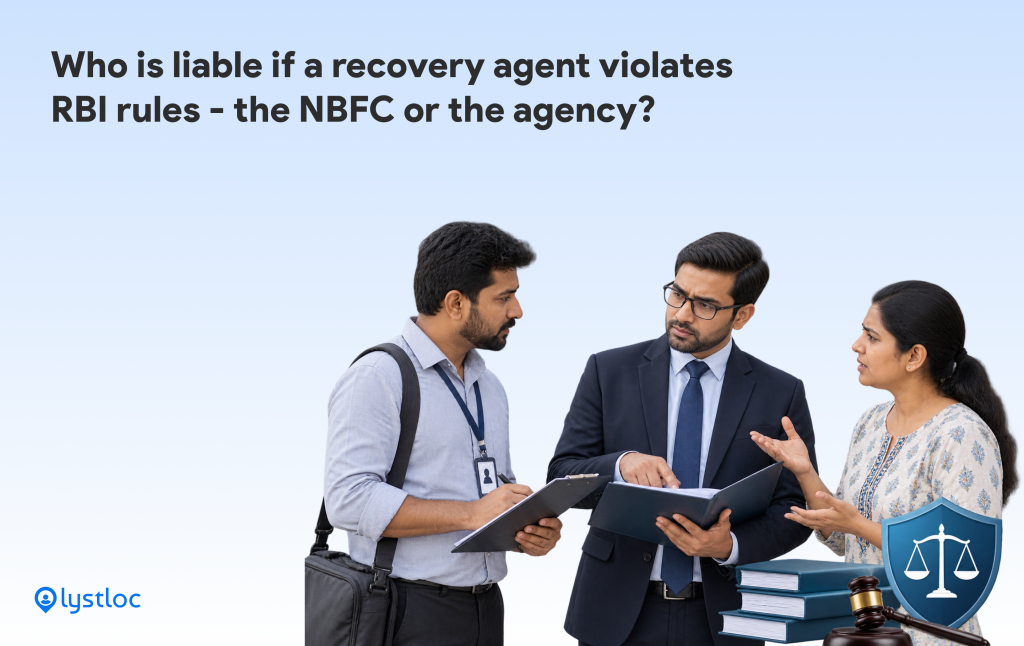
The most important portion for your position is this: even when recovery is contracted out to a third-party agency, the NBFC is still personally accountable for the actions of its recovery agents. “The agency did it, not us” is not a defense before the RBI. The lender bears the responsibility, scrutiny, and complaints if an outsourced agent violates the Fair Practices Code.
“We told the agency to follow the rules” isn’t a compliance approach. It’s not enough to have a contract clause with the agency that hired your agents; you also need to see what your agents are actually doing in the field.
Building a Compliant Home-Visit SOP
At the very least, a practical SOP for your team should address:
Notice: How and when a first visit is preceded by notice.
Visits: It is strictly scheduled between 8 AM and 7 PM.
Identification: Agents should always carry identification and authorization letters.
Conduct guidelines are a written code of conduct that agents approve that addresses language, tone, and limitations on third-party contact.
The escalation path is a well-defined internal procedure that specifies who will assess a borrower’s complaint and how quickly.
Instead of giving your employee a policy document hidden in a PDF, give them this as a checklist. It must be easy enough for the representatives doing the visits to follow under time constraints.
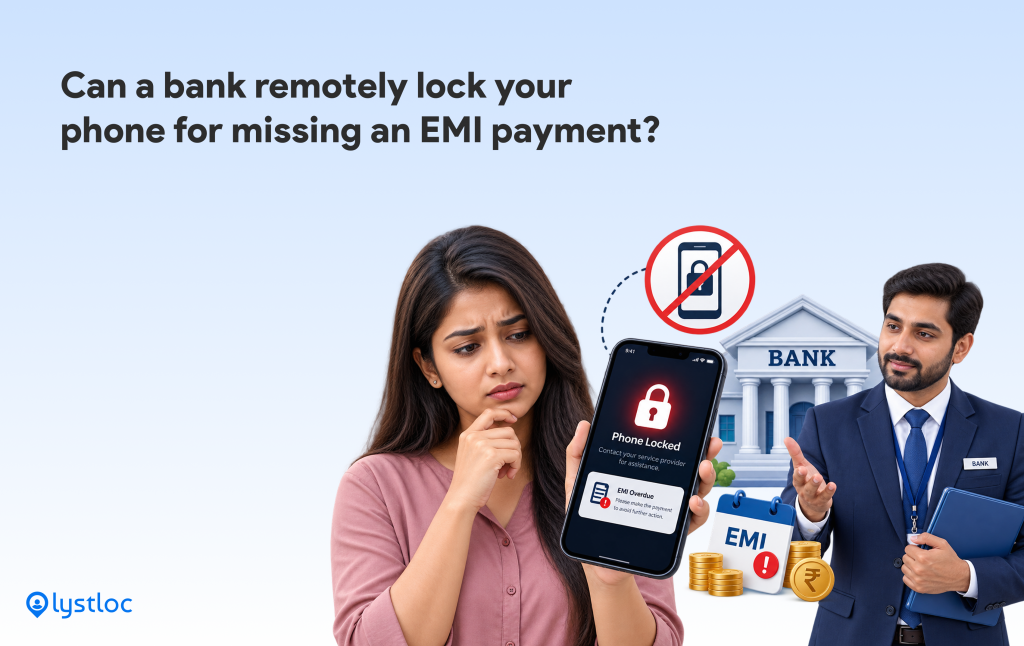
Can a Bank Remotely Lock Your Phone for Missing an EMI Payment?
Privacy is a key component of the new architecture. Recovery agents should only obtain the data necessary to collect the outstanding balances. Banks are required to use security measures to avoid the misuse of borrowers’ private data.
Can your phone be locked by a bank if you fail to make an EMI? Yes, but not immediately. And not always.
Lenders who employ technology to remotely restrict a funded laptop, tablet, or smartphone are subject to regulations set down by the RBI. First, the loan has to be taken out expressly to pay for that gadget. A typical personal loan cannot be used as justification by a lender to remotely disable your current phone.
Additionally, there is a waiting period. Once an EMI is missed, a device cannot be remotely restricted. Only once the loan has been past due for at least 30 days can restrictions start.
Only once the account has been past due for sixty days can a total device restriction be put in place.
Incoming calls, SMS, emergency communication, and other features required for employment and labor must be accessible. Additionally, unrelated personal data like contacts, photos, videos, call logs, SMS messages, and location history cannot be accessed by lenders using the technology.
How Can NBFCs Prove Compliance If a Borrower Disputes a Visit?
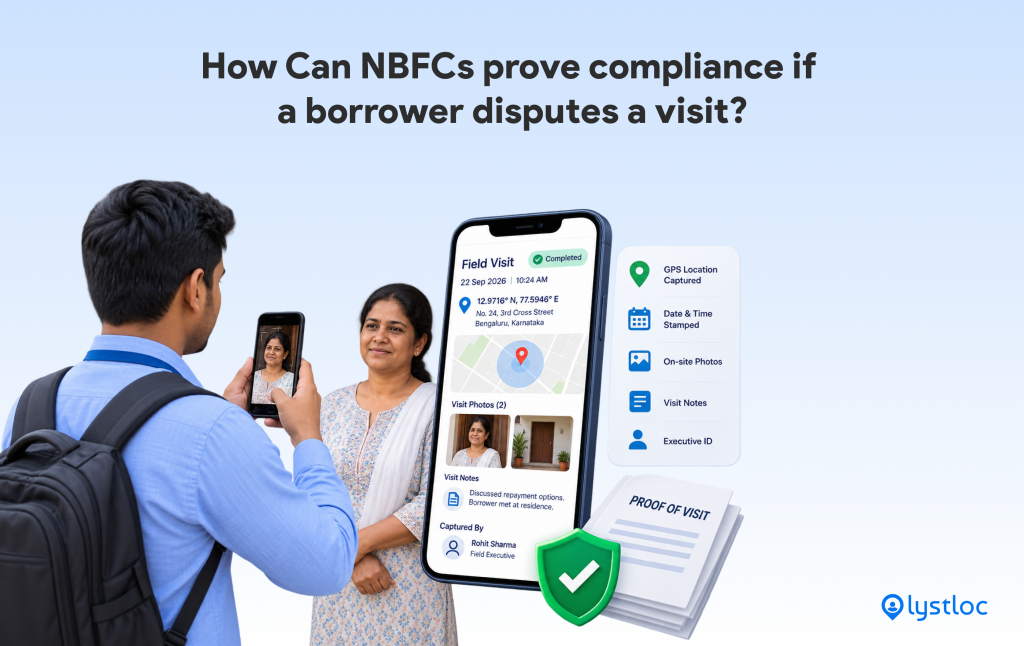
It’s one thing to have a compliant SOP on paper. Another is demonstrating that a certain visit came after it, months later. “Our policy says agents follow the rules” does not support a specific complaint for a particular date and time when a borrower disputes what happened during a visit.
Here is where more NBFCs are incorporating an evidence layer into their field operations: digital records of the notice sent and the ID/authorization displayed. Also, geo-verified visit logs that verify an agent was at the borrower’s registered address (and not somewhere else), timestamped to demonstrate the visit fell within permitted hours.
It provides you with a tangible document to provide to a grievance officer or the Ombudsman in the event that a complaint is contested, but it does not replace your SOP. For precisely this type of audit trail among loan officers, RMs, and collection agents, NBFCs are increasingly using field-tracking tools like Lystloc.
How Lystloc Helps NBFCs?
Instead of depending on an agent’s end-of-day report, Lystloc provides field agent verification compliance and operations teams with real-time data. It provides a geo-verified record of every visit for NBFCs managing recovery agents, loan officers, and RMs throughout the field. The system automatically captures location, timing, and visit notes. When a complaint arises, that record serves as proof for an NBFC.
Lystloc guarantees that a visit took place:
- Inside the RBI’s approved window,
- At the correct address,
- With the appropriate paperwork,
- Without having to reconstruct it.
Try Lystloc’s Free demo now!