What is a CRM and how is it helpful for Field Sales Management?
Table of Contents
A CRM is a complete system that centralizes, simplifies, and improves client interactions across sales, marketing, and service. CRM software analyzes client data, automates company operations, and promotes interdepartmental cooperation using AI, cloud, and other digital technologies.
CRM helps field sales management in various ways. It enables field sales teams to classify leads and track the sales funnel efficiently, to focus their marketing efforts and increase sales.
Field teams can visibly monitor potential customers as they move through the purchase process with the aid of the sales pipeline.
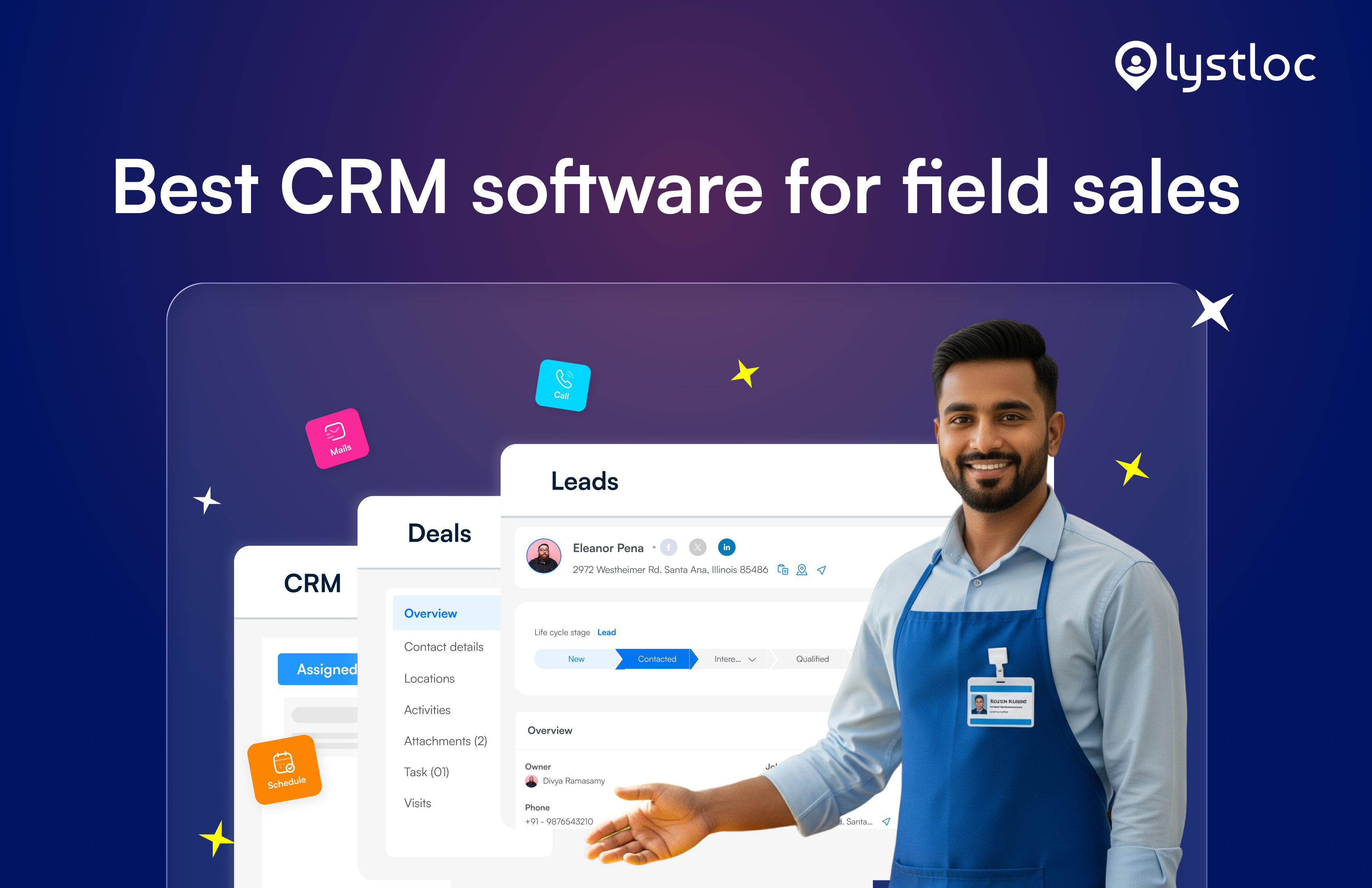
Best CRM Software for Field Sales – LystCRM
Instead of pressuring companies into inflexible frameworks, LystCRM is a mobile-first CRM that is adaptable to real-world field business operations.
Its modern architecture, which allows for the customization, linking, and automation of every component from leads to orders, is what makes LystCRM unique.
This enables businesses across various sectors to create a system that precisely replicates their sales, service, or operational procedures while maintaining complete control over field operations.
“Can we look at how LystCRM functions with its distinct modules?”
Before diving into LystCRM’s modules section, let’s talk about something interesting.
“Yeah, it’s about AI. Who doesn’t want to use this modern AI?”
If you get AI in your CRM, then imagine how lucky you are to access your data easily. Lystloc proudly releases its first AI named as LystAI.
LystAI is a “native AI” created specifically for the LystCRM software.
Want to explore more? – Just give LystCRM’s free trial here!
After examining LystCRM modules, let’s review the functionality of LystAI in LystCRM.
Core Modules of LystCRM:
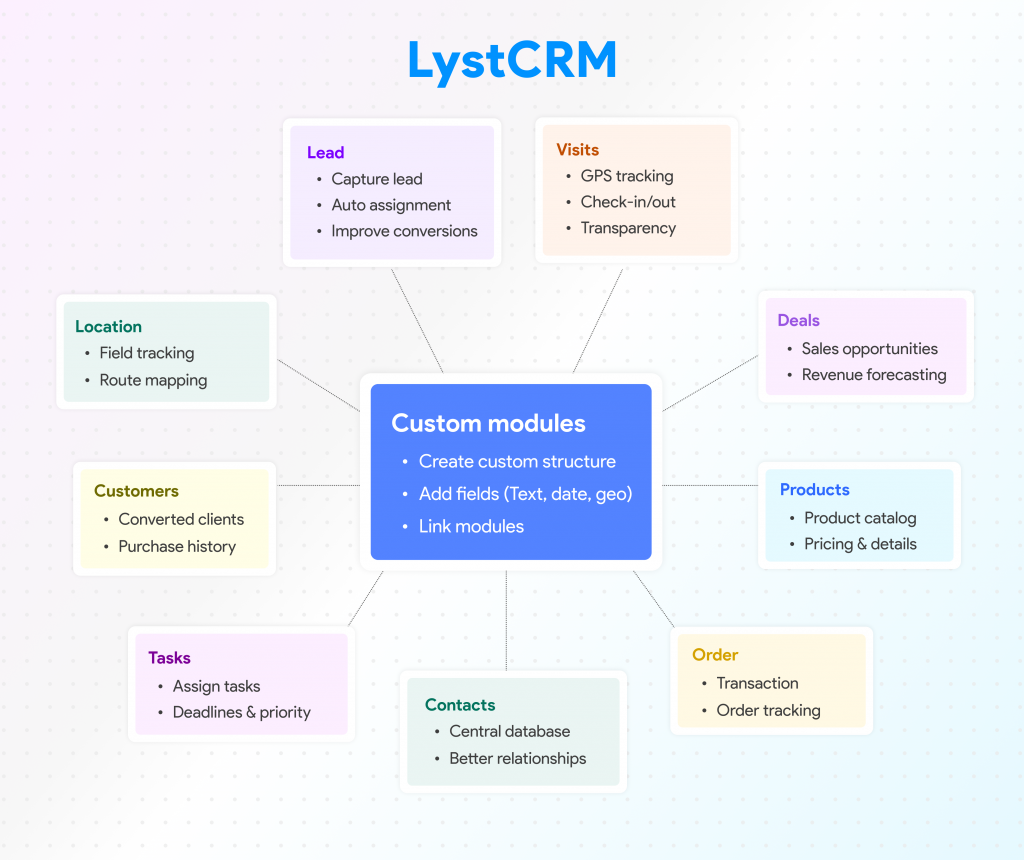
Now, let’s dive into a different set of modules with its unique features and purposes for your field business. LystCRM can elevate your field sales and achieve higher field productivity.
- Custom Modules
- Leads Module
- Contact Module
- Customer Module
- Task Module
- Visit Module
- Deals Module
- Product Module
- Order Module
- Location Module
Interlinking between LystCRM Modules
Interlinking between modules is possible with LystCRM. It establishes a comprehensive ecosystem that provides a 360-degree picture of field operations by permitting modules to be connected, such as:
Leads → Contacts → Customers
Orders → Deals → Customers
Visits → Locations → Tasks
This reduces data duplication and enhances decision-making by producing a full visibility of company perspective.
Together, let’s build an error-free network!
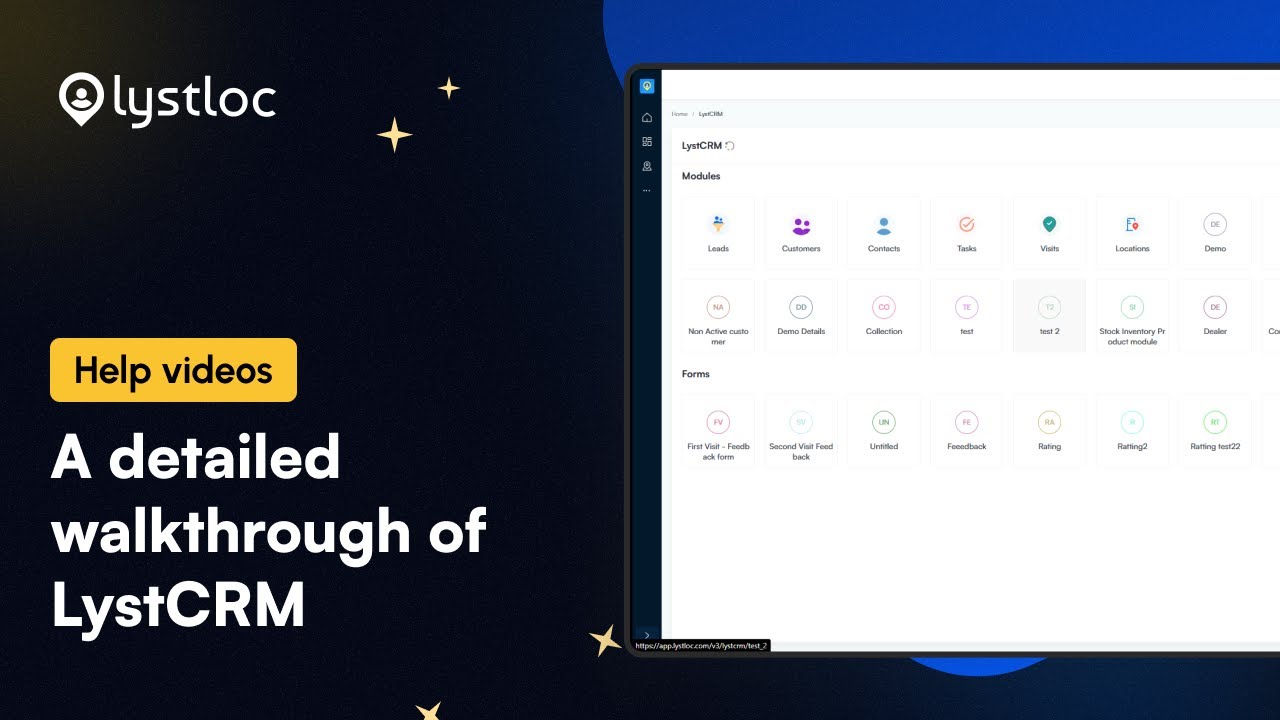
Create Custom Modules
One of the most effective functionalities of LystCRM is to build its custom modules. This module enables field teams to design their own data structure, a significant benefit.
Users can create modules, such as distributors, vendors, franchise partners, or service requests, according to their specific needs, rather than being limited to existing organizations.
Typically, creating a custom module involves:
Go to settings – name the module, and add elements such as dates, text inputs, dropdown menus, and even geolocation-enabled fields.
A connected ecosystem may be created by connecting these modules with pre-existing ones, like leads or orders.
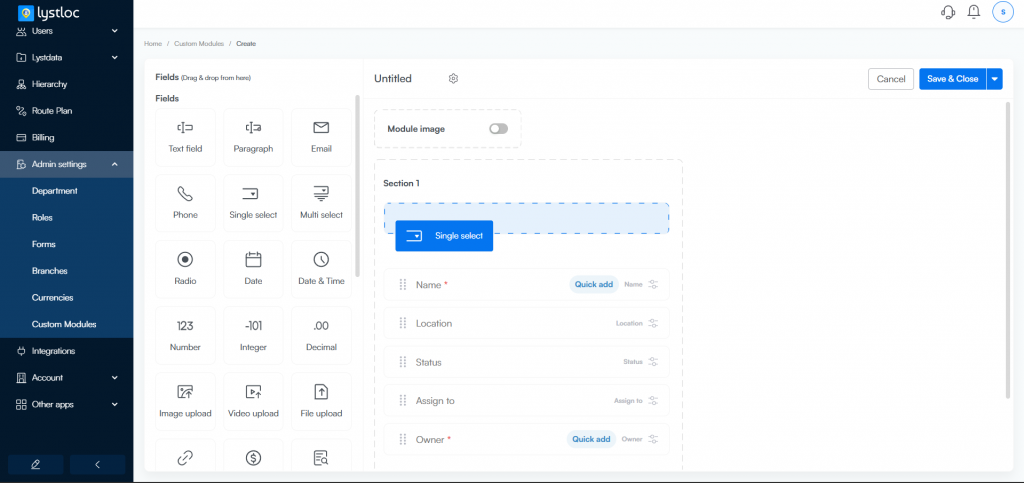
Industries with non-standard operations can especially benefit from this flexibility. A manufacturer may develop a distribution network module, for example, while a healthcare industry might develop a patient visit tracking system.
The advantage is that companies can manage everything in a single, cohesive CRM system that truly represents their field operations, eliminating the need for several contrast solutions.
Leads Module
Potential clients are found, followed, and developed in the leads module of LystCRM, which serves as the beginning of the sales journey.
Leads can be automatically distributed to salespeople based on factors like geography or priority after being manually uploaded, imported, or recorded via integrated forms.
The system keeps a clear pipeline picture as leads go through various phases, such as new, qualified, or converted, which aids teams in understanding the state of possibilities.
This module allows you to convert leads as contacts, which will be helpful for field sales.
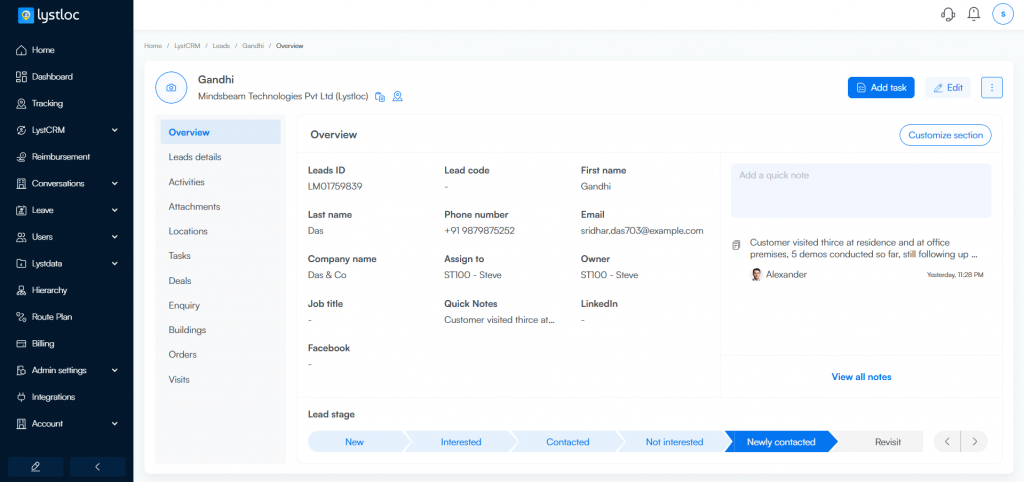
This methodical strategy guarantees that no opportunity is missed and that follow-ups take place on Best CRM Software for Field Sales – LystCRM schedule.
This module helps field sales teams respond more quickly and increase conversion rates in sectors where lead management is crucial, such as banking, real estate, and education.
Field businesses may greatly shorten reaction times and boost productivity by centralizing lead data and automating assignments.
Contacts Module
The contacts module, which works as a central repository for all people, stores a lead’s information after it has been qualified. Detailed data, including phone numbers, email addresses, business affiliations, and correspondence histories, is recorded by this module.
Every communication call, email, and meeting is recorded, creating a comprehensive engagement sequence.
By comprehending previous encounters and preferences, this all-encompassing vision helps sales teams to forge stronger bonds.
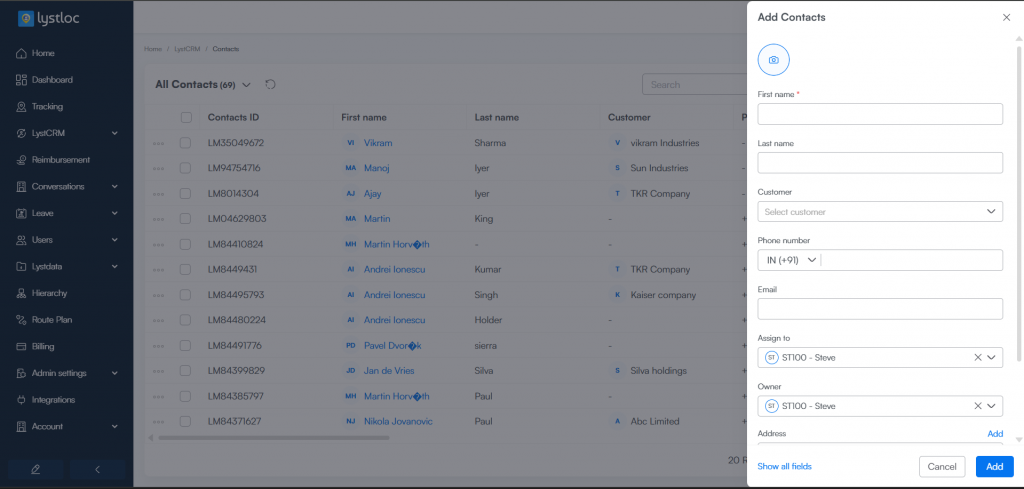
In industries where relationship management is essential, such as B2B sales, healthcare, and retail, having a single source of truth for contact data enhances client satisfaction and communication.
Additionally, it guarantees consistency when several team members engage with the same contact.
Customers Module
Businesses may efficiently manage long-term connections by using the customers module, which represents converted leads and current clients. It offers a thorough overview of the client’s past, including purchase, service, and visitation information.
This enables field businesses to monitor a customer’s complete lifespan, from acquisition to retention.
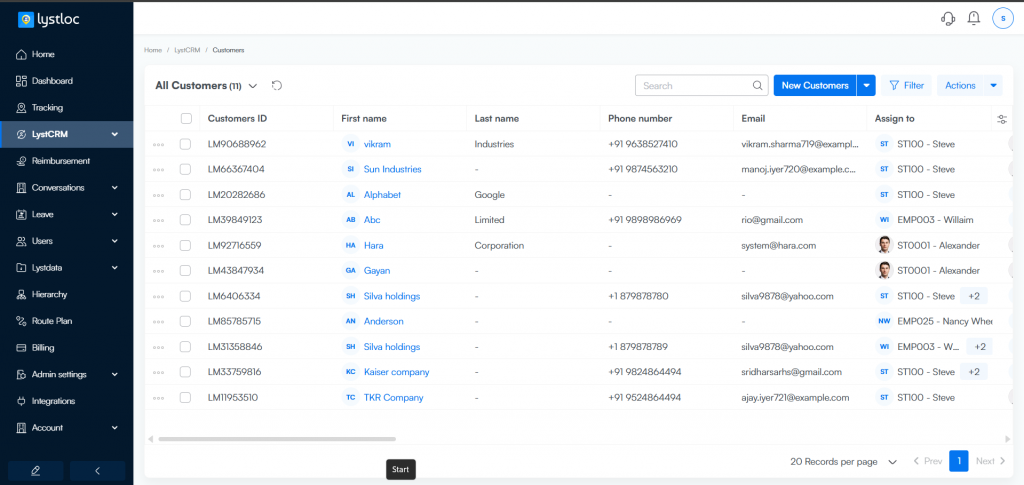
Businesses may tailor their engagement strategy and spot chances for cross-selling or upselling by keeping this level of data
For example, retail businesses may keep tabs on recurring purchases, while financial institutions can keep an eye on client portfolios.
Higher lifetime value and greater client retention are the outcomes, which are fueled by more insightful and focused communication.
Tasks Module
By enabling managers to assign, oversee, and monitor activities throughout the company, the tasks module aids field teams in maintaining organization. Tasks may be set up with deadlines, priority, and location tags.
They might be internal assignments, meetings, follow-ups, or service activities. Real-time task status updates from field sales teams guarantee that managers are always aware of developments.
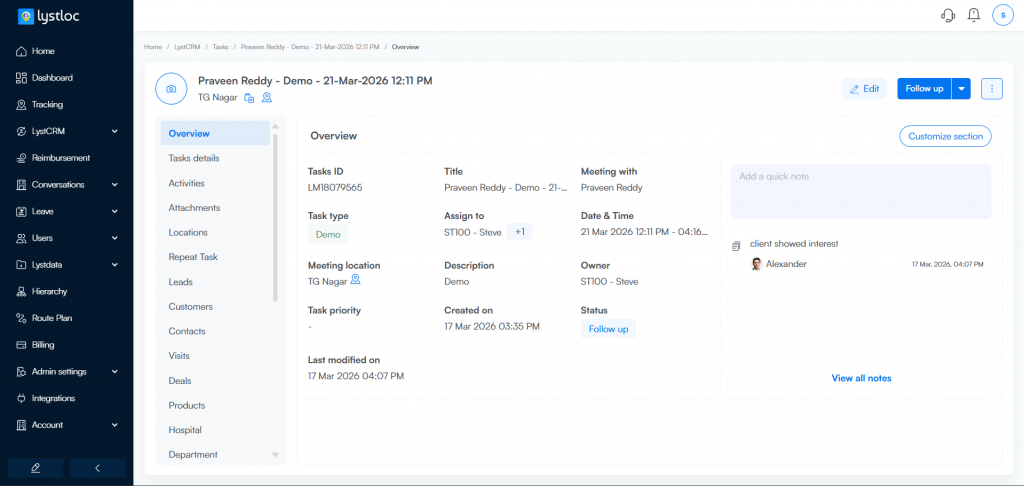
This module is essential for raising responsibility and productivity. Task monitoring guarantees that work is finished on schedule. In accordance with the plan, sales teams work remotely in sectors such as field sales, logistics, and service management.
The likelihood of missing deadlines is further decreased by automated reminders and notifications.
Organizations can precisely monitor on-ground actions with this visits module, which was created especially for field operations.
Visits Module
Organizations can precisely monitor on-ground actions with this visits module, which was created especially for field operations. Accurate reporting is ensured when a field representative uses GPS-enabled tracking to check in and out of a client location.
During the visit, further information can be captured, including meeting notes, pictures, and results. This real-time tracking gives management total transparency and removes the chance of fraudulent or missing visits.
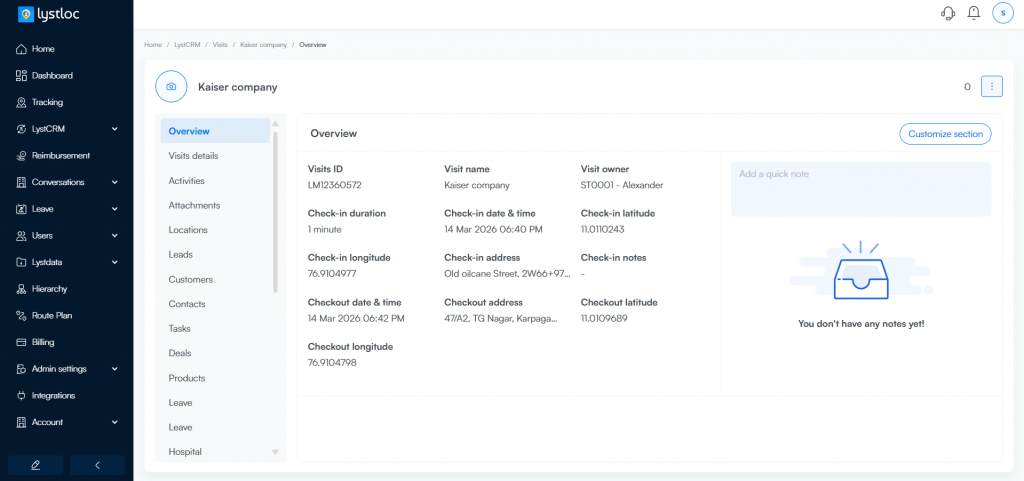
This feature guarantees that field operations are authentic and in line with corporate objectives. This is beneficial to industries like medicine, sales, and logistics. It also aids in enhancing route planning and evaluating visit efficiency.
Deals Module
The deals module is primarily concerned with tracking prospective revenue and managing sales prospects. Every transaction is a possible sale that progresses through several pipeline phases, giving a visual depiction of development.
This aids field sales teams in locating bottlenecks in the sales process and prioritizing high-value offers.
Businesses may make better judgments and more accurate revenue forecasts by evaluating deal data.
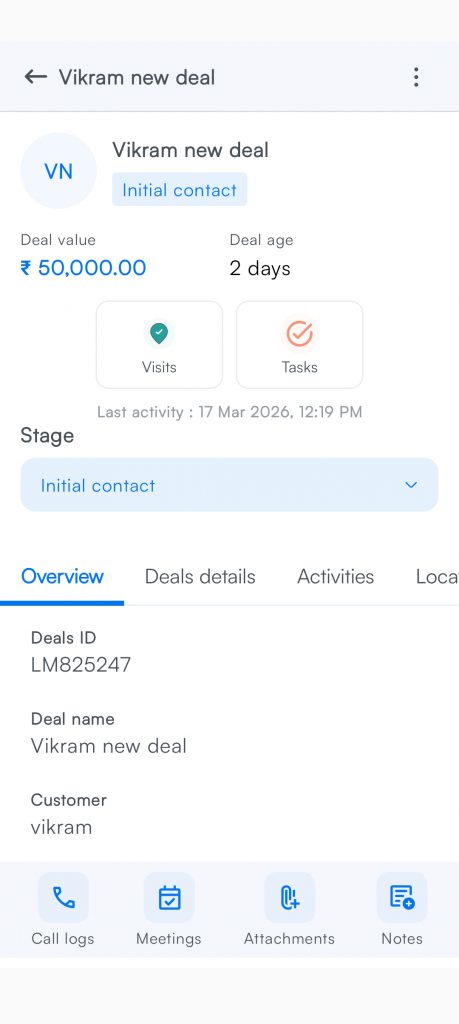
This module guarantees that every opportunity is monitored and managed efficiently, resulting in quicker closes and higher income in sectors like real estate, SaaS, and automobile sales, where deal cycles can be complicated.
Products Module
The products module enables companies to keep detailed information about products. Field sales teams can easily generate precise estimates and proposals by including information about each product, such as price, category, and descriptions..
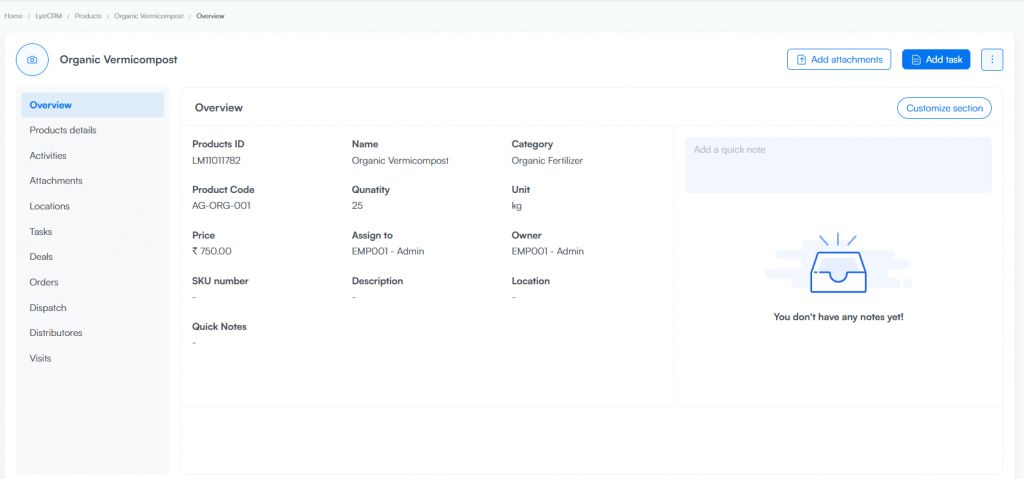
This centralized approach guarantees pricing uniformity and minimizes mistakes in the sales process.
A well-structured product catalog boosts productivity and facilitates improved inventory and sales management for manufacturing, retail, and wholesale companies.
Orders Module
The last phase of the sales cycle, which involves turning confirmed deals into transactions, is managed by the orders module.
Orders may be connected to promotions, goods, and customers, resulting in a smooth transition from opportunity to fulfillment.
Companies may monitor progress, check order status, and guarantee on-time delivery.
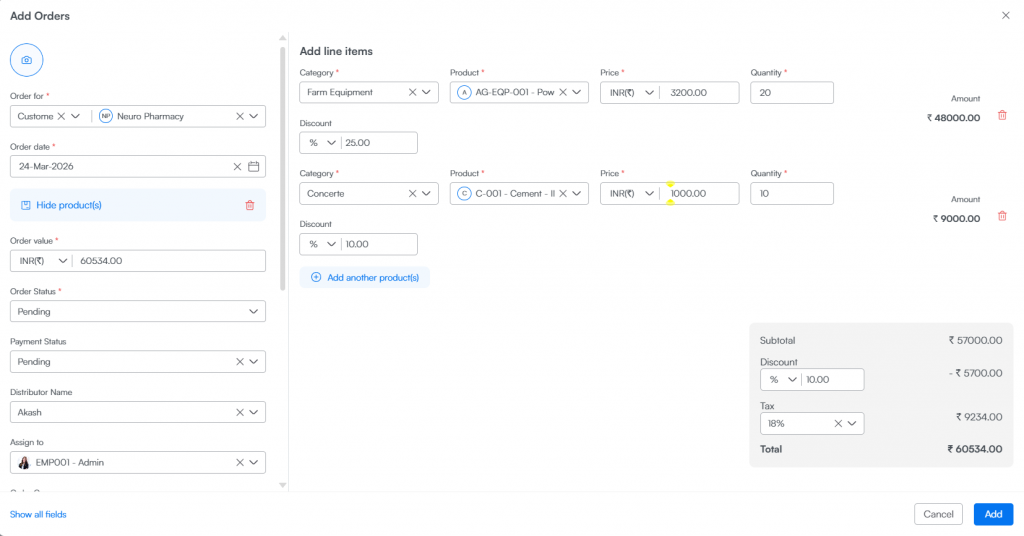
Particularly in sectors like B2B distribution, FMCG, and e-commerce, this integration eliminates mistakes and decreases human labor.
Businesses may increase operational effectiveness and enhance customer service by automating order management.
Locations Module
By tracking field team movements and physically mapping company data, the locations module offers an important layer of real-time insight.
Managers may make better plans and decisions by using a map to see employee positions, customer distribution, and visit routes.
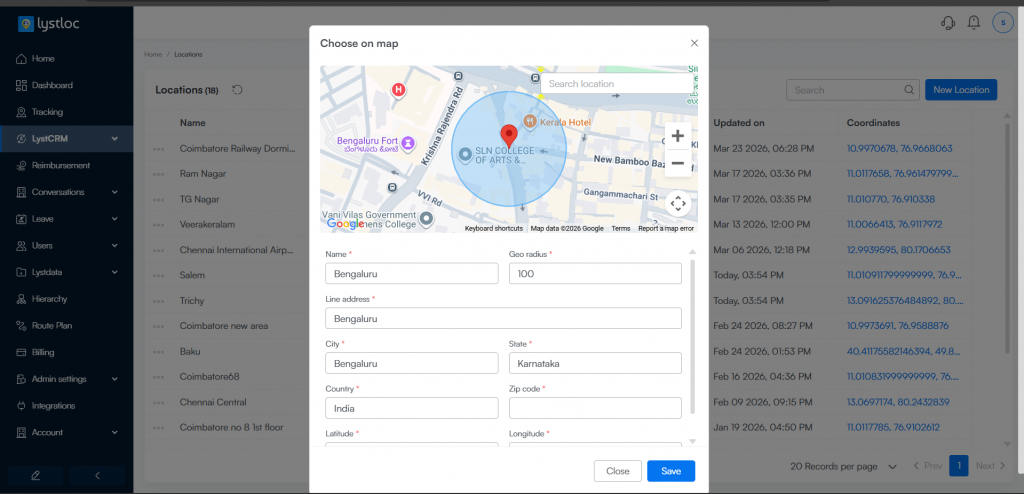
Travel route optimization, territory management, and increased field production are all made possible by this functionality. Sales teams can oversee territory, logistics firms can monitor deliveries, and service providers may guarantee prompt visits.
Travel time is shortened, expenses are decreased, and efficiency is raised.
Hope you get a detailed module explanation in each section. Now, how does LystAI help you?
LystAI gives you instant information about all your leads, customer lists, how many visits are done per day, the outcome of the client visits, and much more, just in seconds. You don’t need to search.
For example, you can ask how many leads I have. And you get answers such as the number of leads in a certain stage and the list of records.
Also, LystAI assists users with inquiries about the phases of the lead pipeline.
You got a question, I guess?
LystAI is definitely not a chatbot here. As we know, chatbots usually offer standardized responses.
LystAI offers customized data and can even provide instructions for CRM features like building a custom module.
In the future, LystAI will be customized to create automatic tasks for the required lead with data and time.
We simplify your tasks and eliminate time spent on searching and assigning to your leads.
No more waiting.
Wrapping up
LystCRM combines customization, automation, and real-time tracking into a single platform to suit a variety of business requirements.
Businesses from many sectors may improve client connections, increase team efficiency, and streamline procedures with this unified strategy.
LystCRM offers the flexibility and control required to expand effectively, whether you are managing a sales funnel, monitoring field activity, or processing orders.
Start using LystCRM today!