Let’s see the routine of every field manager. You make the call, you send the messages, you ask, “Where are you?” You spend hours tracking your team’s location and their route, and finally, fuel goes to waste.
Employee location tracking allows managers to track their employees’ locations using the GPS on their phones. It also integrates other features such as employee attendance, routes, leave, reimbursement, CRM, and tasks. With these integrations, employee location tracking systems do much more than you expect.
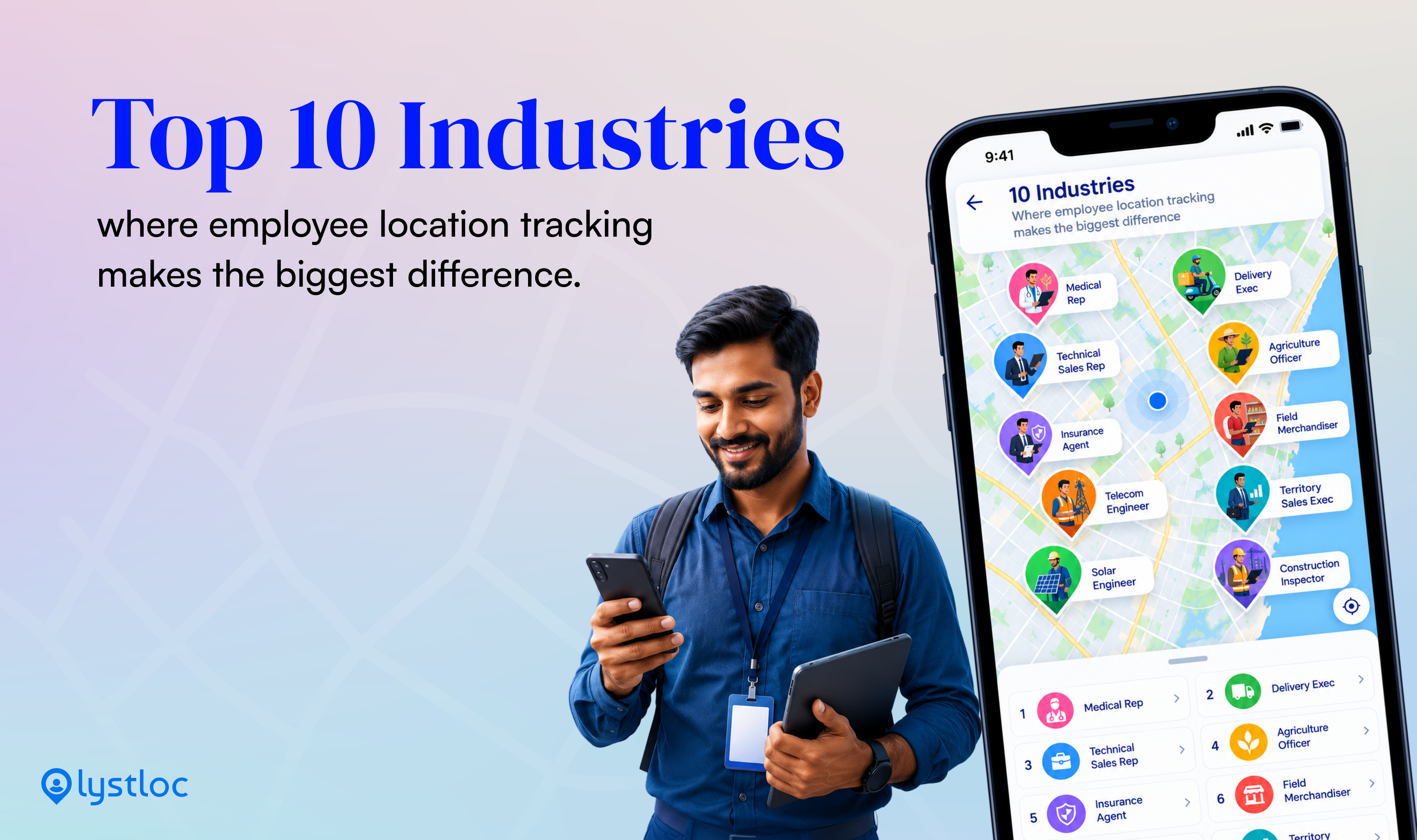
Real-time employee location tracking benefits some businesses more than others. Below, we look at the top industries where employee location tracking systems deliver the highest ROI, and why.
Employee Location Tracking Systems: Why It’s More Important Than Ever
Table of Contents
Employee location tracking systems are more important for four reasons.
First, field teams are bigger. More businesses depend on employees to work outside the office to sell, serve, and deliver.
Second, high fuel and travel costs. Every day, field teams take the wrong routes, make extra trips, and visit the wrong customers.
Third, more and more customers expect instant, exact visits.
And finally, field teams must work outside the office to meet regulations and comply with the law. This means field teams take thousands of trips to prove they visited the customers.
Without employee location tracking systems, it’s nearly impossible to manage field employees. Fake attendance can occur. Reimbursement claims lead to disputes. Critical, time-sensitive jobs are frequently given to the wrong field employee. The right tracking system eliminates all these problems.
Explore How Different Industries Use Employee Location Tracking Software to Manage Field Teams Efficiently
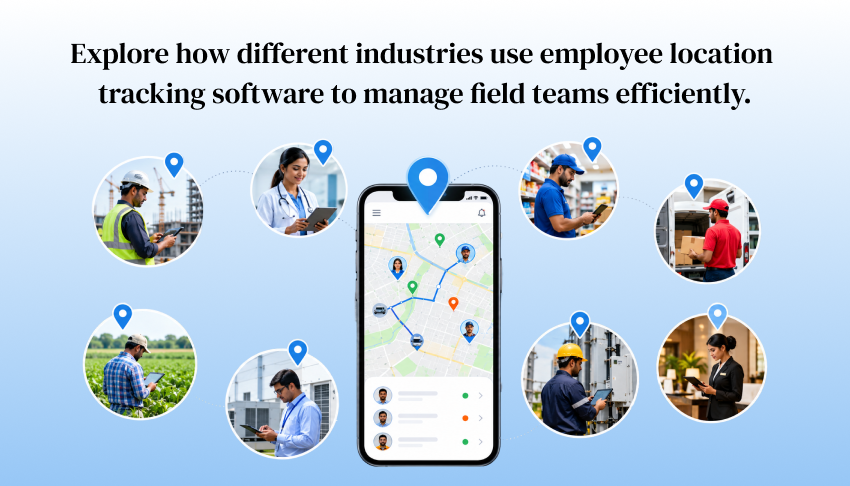
These are the industries that have the best ROI for location tracking. Here, we break down the challenges each industry faces and show how location tracking solves them.
1. Field Sales and FMCG/Distribution
FMCG teams cover large territories and visit a large number of outlets every day. Managers need evidence that all outlets are covered and all orders are booked. Without location data for sales employees, they have no idea which field reps are visiting. In FMCG, a missed outlet is a missed sale and it often goes unnoticed. With location data, managers see live reports of what is missed in a day. So, the field team sells more and the manager spends more time on productivity.
Key Benefits
· Improved route planning and beat planning
· Live status of sales employee
· Lower travel and fuel costs
· Accurate field employee attendance
· Evident workforce outlet coverage
Real World Example
A distributor sees two of his salespeople are close to the same outlet, and another outlet has not been covered all week. The distributor changes the beat plan to cover the outlet that has not been covered all week. Platforms like Lystloc help FMCG teams with live staff location, geo-attendance, and route optimization.
2. Medical Representatives (Pharmaceutical)
Medical Representatives (MRs) need to cover a territory and meet doctors to sell and hand over samples. Managers need proof that those visits happened. Medical reps handle a number of doctor calls per day. Each call counts for samples, compliance and relationships. The location of reps helps prove that those visits happened. Geo-stamped visit records provide managers and audit teams with a clear, objective trail.
Key Benefits
· Doctor visit verification
· Geo-stamped call reports
· Idle time reduction
· Improved visibility of managers
· Workforce location tracking for audit and compliance
Practical Example
An MR reports ten doctor calls in a day. The location log shows the visit times and places, so the manager can trust the report without making extra calls.
3. Logistics, Delivery & Last-Mile
Logistics involves a lot of unpredictability, like fuel wastage and delays, which leads to dissatisfied customers. Delivery primarily depends on trust and timely reach. With location data, when a dispatcher can see on a live map, they fetch complete delivery details. Where the truck is now, at which place it is traveling, any route deviation, waiting for gate pass, and etc. Live tracking helps determine the exact location of delivery executives and how long they spend at each stop.
Key Benefits
· Live tracking of delivery executives
· Better routes with fewer kilometers
· Exact distance reports
· Support for proof of delivery
Use Case
A customer calls to enquire about the whereabouts of his delivery. The dispatcher opens the map to see the rider is just two kilometers away and tells him the exact time in which the rider will reach.
4. Field Service & Maintenance (HVAC, Appliances, Telecom, Utilities)
When a customer reports a breakdown, swiftness is key. In field service, the customer expects the fastest way to deal with the job. Knowing which technician is available to the nearest location helps the manager to assign the task quicker. Real-time location tracking helps determine the available and nearest technician. Instead of calling for location updates, this is the easiest way to complete the field services.
Key Benefits
· Nearest technician dispatch
· Shorter response time
· Accurate job time tracking
· Better control of travel time
Example Scenario
A telecom tower goes down. The control room sends the nearest engineer to the site, and the repair begins in 20 minutes rather than the usual 2-hour response time.
5. Construction & Infrastructure
Construction firms manage multiple work sites at a time. It’s hard for their managers to keep track of who is at which site, how many hours they work, and if their attendance is real. They often move from one site to another, so paper registers are hard to calculate. Location-based attendance gives a clear picture of how long the workers spent on one site with actual numbers. Payroll will be easy and construction heads get the accurate report of every site worker without any disputes.
Key Benefits
· Attendance is geo-fenced to site
· Exact labor hours are recorded
· Productivity is measured site-wise
· Safety is monitored
· Benefits of workforce location tracking strengthen payroll accuracy
Use Case
A supervisor marks attendance of workers only when they enter the site boundary. Payroll is done based on real-time attendance hours.
6. Healthcare & Home Care / Ambulance Services
Home care nurses and ambulance crews work where no manager can see. With employee location tracking, management can be assured that visits have been made, and the employee can be located in an emergency. Location awareness is also a safety net, because the team knows where an employee is if something goes wrong. For ambulance services, knowing which team is closest can make quicker decisions without waiting.
Key Benefits
· Verified home visits
· Faster ambulance dispatch
· Location of field employee for safety
· Accurate attendance
Practical Example
A home care provider sends a nurse to a patient’s house. The visit is recorded with time and location. The family and the provider have proof of the visit.
7. Insurance & Banking Field Agents
Agents of Banks and Insurance Companies visit customers to authenticate their documents and policies. Managers need to be assured of the real-time visits of their insurance agents. Location data of field employees ensures this. Location records make it easy to confirm that field meetings happened, without questioning the agent. Managers can also see whether an agent meets the right lead or wasted hours in travel. Verified activity keeps processes moving and keeps disputes short.
Key Benefits
· Verified customer meetings
· Better route optimization
· False claims of visits are ruled out
· Stronger control for manager
Practical Example
An agent says he met a customer to pick up some documents. The location record shows the visit took place. The file moves forward without any doubt.
8. Facility Management, Housekeeping & Security
How Location Tracking Helps -Site Teams
These companies have employees at many client sites working on different shifts. Supervisors cannot be present at every location. Clients want proof that services were actually done. Geofenced attendance shows which field employee reported to site and when. Supervisors can have complete visibility on who is working and who is missing. Clear records also make client reporting faster and more credible.
Key Benefits
· Geofence attendance
· Real-time supervisor tracking
· Accurate payroll hours
· Better client reports
Use Case
A security company checks that guards are at the right site at the start of their shift. If a guard is missing, the supervisor knows and sends a replacement.
9. Estate & Property Management
Property agents spend the day moving between sites and client meetings. Without tracking, it is hard to know which visits actually happened. With location data, property managers know who showed which property and who left customers waiting. They find complete details from site visits to follow-ups with buyers and tenants. This helps to get fair incentives based on their field work.
Key Benefits
· Verified site visits
· Agent routes
· Clear view of lead follow-ups
Practical Example
A sales head sees that an agent visited three properties with one client in a single morning. The record helps with follow-up and fair credit for the lead.
10. Automobile (Sales, Service & Test Drives)
Dealerships need to monitor test drives, service pickups, and sales visits. Tracking keeps vehicles safe. It proves that the employees did their work. A recorded route and timeline for each test drive protects the dealership and the customer. Sales visits become easier to review and managers can see activity without any check-ins. It also gives teams a clear picture of how a vehicle was used and handled.
Key Benefits
· Test drive route verification
· Service pickup and drop tracking
· Sales visit accountability
Use Case
A customer takes a test drive. The dealer sees the route, how long it took, and the return time. This removes confusion about vehicle use.
How to Choose the Right Employee Location Tracking Solution
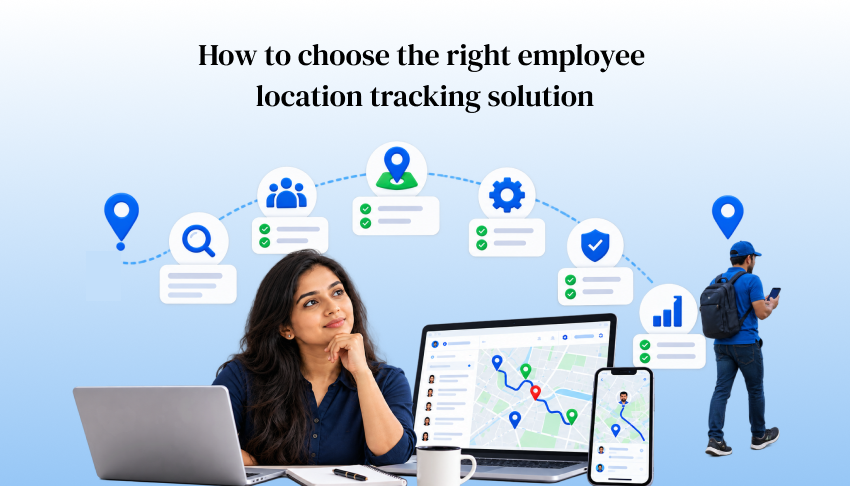
The right solution should offer real-time updates, simple attendance, and tools that your team uses every day.
Key features:
· Time and offline tracking: Location data saves even when the network is weak.
· Geo-fence attendance: Field staff can only mark attendance at the location.
· Route playback: See the full path an employee took.
· Distance reports: Verify travel claims with real data.
· Task and visit management: Close jobs in the same app.
· Battery-friendly design: The app should not drain phone batteries.
· Privacy controls: Track only working hours with clear approval.
The best tools combine location, attendance, and CRM or task features in one platform. This gives full workforce location tracking benefits without switching between apps. A real-time employee location tracking solution like Lystloc brings these together.
Which Industry Benefits the Most?
These 10 industries see gains in cost, control, and productivity. Field sales, pharma, logistics, and construction often see results fastest. Any business with a mobile team can benefit.
In short, the industries where GPS-based employee location tracking makes the difference are those that depend on people working outside the office.
The workforce location tracking benefits are clear: attendance, shorter routes, faster service, and fewer disputes.
Ready to see how real-time employee location tracking can transform your field team?
Explore Lystloc’s Employee Location Tracker. See how it works for your industry.
You can also book a 15-minute demo or start a free trial now.